
How do you learn classical singing?

Where do you start, learning how to sing classically?
You've got to want to do it - be excited and curious enough to get on board.
The vocal journey has a very human beginning and it is good to remember that. At the heart of all we do as singers, is the joy of making music and the release of self-expression. Sharing with others is vital to the learning experience, because it provides a solid base for exchange, observation and mutual support.
Also, there is no quick fix - no singing teacher worth their salt has a magic wand. You - the singer in you - has to be bitten by the I-want-to-sing-classical-song bug for the duration and be lit up by it over and over again.

I remember years ago, watching a television advert, where an old lady taps a police officer on the shoulder in the street and asks,
“How do I get to Carnegie Hall?”
The officer answers with a wry smile, “Lady, you gotta practice!”
And he was right. Like anything else, you have to want to do it enough and put your...
Vocal basics every beginner classical singer should know.
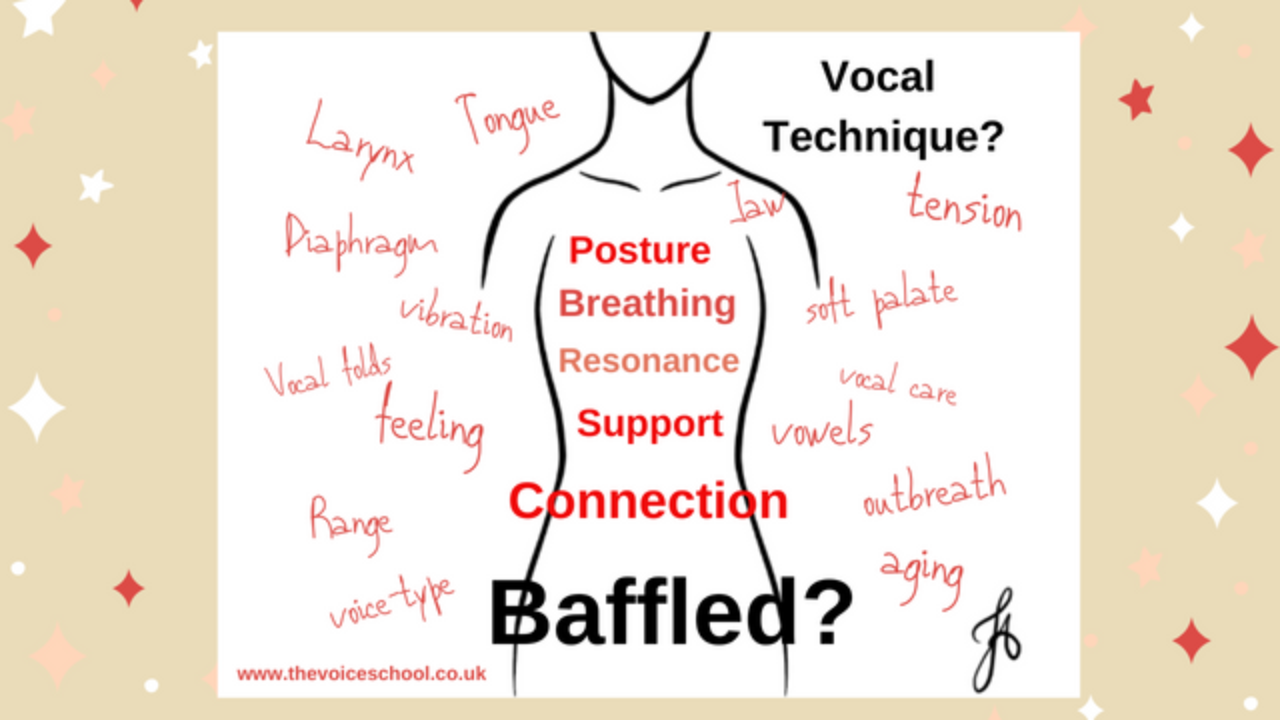
In 2020, I bought a new and interesting book, the delights of which I hardly had time to delve into amid all the extra online Virtual Studio classes and other activities, created by COVID-19 and the human desire for people, singers, to seek to connect.
The book had been sitting on my desk in the study since mid-June that year. Seeing it still there one day, I thought to remind myself why I bought it in the first place. Glancing at the back cover told me everything I needed to know.
"Somatic learning ... through the practice of these methods, a person can become more sensitive to the quality of his or her movement and more integrated in their co-ordination."
Ah - of course! It had to do with POSTURE and more importantly the habits (good and bad) which underpin everything we try to achieve as singers. Vocal Technique-wise, posture is the first of the 3 essential pillars that I talk about in my YouTube technique tutorials, particularly the Vocal Warm-ups.
(The book has a lovel...
Singers: How should we practice?
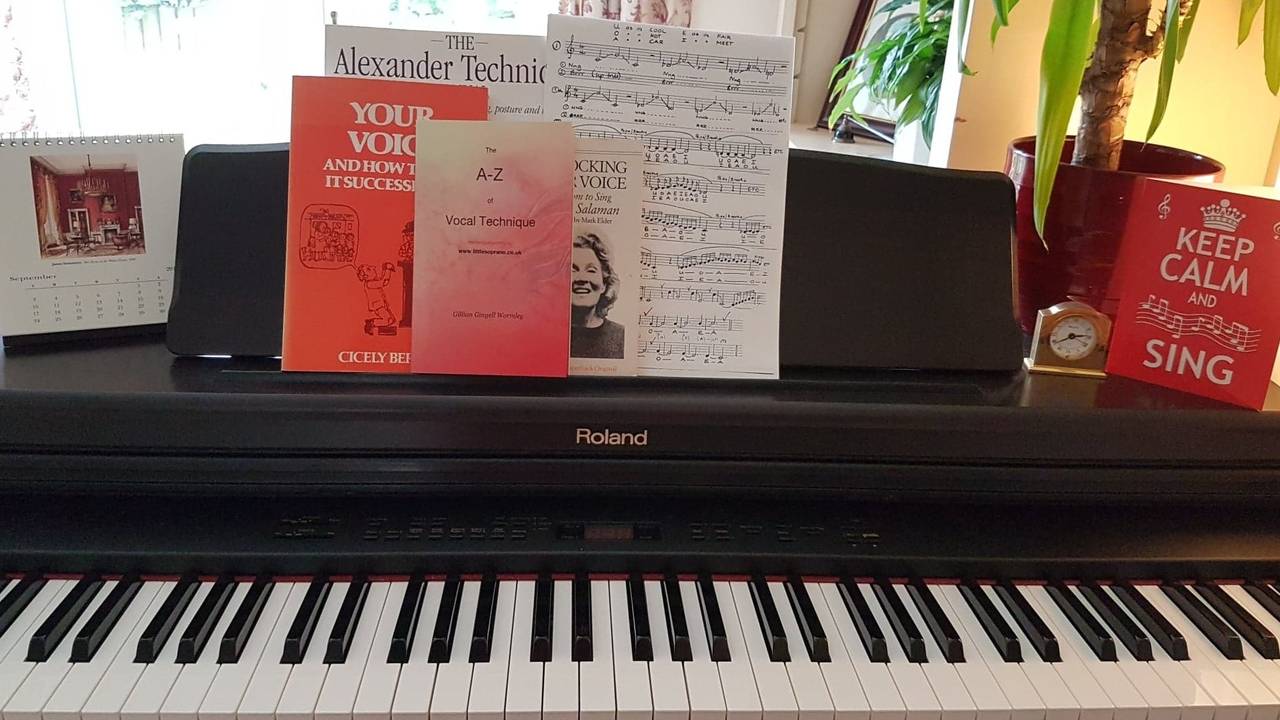
In other words: practice certainly, but focus. So, just how should you practice singing?
Let me first tell you about this. It's worth thinking about, especially when it comes to muscle memory. Some years ago, I came across an excellent post in a roundabout way as you do, pulled in by its title:
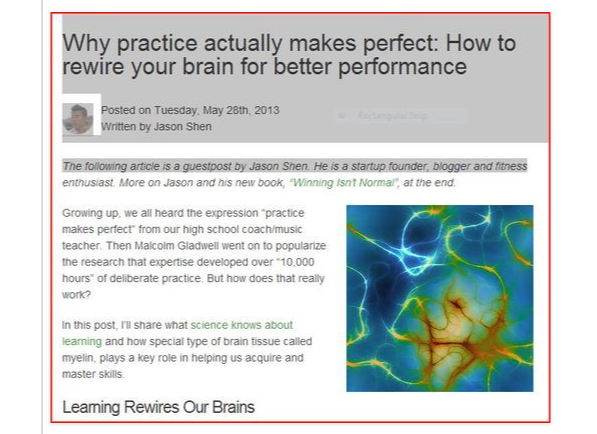
You can see why can’t you? Learning rewires our brains. I was thinking of singing/performance. So I clicked the link to have a good read. (Tip - It's still a good read, even now.)
Funny how these things can pull together fragments of your life, personal and professional. I started thinking about my little daughter, Alice and the problems she had had with Leukodystrophy. But that's another story.
Soon I was deeply engrossed in fully understanding the important role myelination plays in our gradual acquisition of skills, thanks to Jason Shen’s clear explanations and diagrams.
But then, another pathway of understanding opened.
As a vocal teacher, I always advocate embracing new learn
...Breathing for singers: the ins and outs of it.

One of my teachers, Ilse Wolf, would always talk about ‘singing on the breath’.
Back then, I really didn’t have a clue what she actually meant. I would quietly listen while she explained, while she showed me diagrams in books that had pretty much been worn out by her fingertips over the years, as she pointed out the movement of AIRFLOW in the body as we breathe in and sing OUT.
But that was more than 30 years ago - and now I so GET everything she was sharing with me.
She meant: focus on the out-breath.
I didn’t understand then, but I’ve pursued my learning journey to the point where I now teach the same principles, just as she did then, to all my own singing students.
This infographic is a favourite of mine because it provokes thought. It also gives a hint of what is truly involved in the rather paradoxical ‘breathing mindset’.
But, in truth? It’s the tip of the iceberg.

There’s the fear that since breath is always escaping, it needs to be controlled by
- getting masses...
Singers: Love Your Larynx

The importance of learning all this vocal technique stuff is seeing the bigger picture.
I know lots of new singers are frustrated by vocal technique. In a PDF guide linked beneath my YouTube video, I outline 5 essential vocal tools that really matter in the long haul for vocal health. Muscle-memory-building tools that you rely on the most in the basic use and care of your unique voice. Go grab your free PDF copy and learn more.
Getting to grips with the basic vocal roadmap is paramount ie the scientific reasons why/how the vocal process works so you can work out what is going wrong or RIGHT at any time.

Of course, it isn’t as simple as that … well, it IS actually. In part.
A paradox!
I love to teach my students to self-scrutinise. I give them enough vocal instruction and learning to enable them to feel confident as they experiment along the way. It’s like watching a tight bud unfurl and come into bloom. It’s wonderful.
What’s of the greatest value is the discussion and...
The Serendipity Project for Singers
Serendipity sounds beautiful …
For singers, the meaning can be beautiful, too.
The Merriam-Webster Dictionary website defines “serendipity” as “luck that takes the form of finding valuable or pleasant things that are not looked for.” So serendipity is a happy accident. It comes from being in the right place at the right time.
I’m launching The Serendipity Project as a new idea/area of study for the 2022-23 academic year and on 7th - 10th October we're kicking things off with an inaugural residential weekend workshop for singers at Church Farmhouse, Winsham, in Somerset, UK. This is a well-beloved venue, where many such workshop weekends have been held.
Thank you so much for an excellent weekend in such a perfect setting. My love of singing has been an important part of my life for 50 years or so, interfered often by work! I found your encouragement, advice and praise very stimulating and has given me more confidence in solo work and inspired me to widen my repertoire. Of course,...
4 TOP in-rehearsal vocal care tips for singers
Back to rehearsals soon? Voice feeling a bit rusty?
Here's a little extra guidance beyond the tips I shared in the video above:
Tip #5: Your vocal folds (or cords) are the only pair you'll ever have. You can't go and choose new ones when the old ones start to wear out.

Imagine those little vocal folds, pristine and perfect at birth. Functioning with ease and as usual in babies and young children, with the best and most perfect vocal connection, there can be. What causes things to go wrong when all was perfect at the onset?
True vocal folds are no bigger than your little fingernail. They deserve careful use if they are to serve us well all our lives. Sometimes things go wrong, usually as a result of a poorly mixed cocktail of factors.
For example, if we think of gaining greater volume when we sing, there’s a psychological trigger that suggests to us that we must push more air to make it happen. But a greater volume achieved by pushing more air simply puts more stress on tho...
Singing Tips for Beginners: about your meddlesome tongue.

The audio file attached to this post may also be useful to you if you're starting to piece together the need for a better understanding of how the voice actually works - and how things can go wrong. There's more to explore HERE in my 30-Day Vocal Jumpstart for Singers.
In any language, the tongue is a mighty muscle - and I’m sure if a cat (big or small) could talk, he or she would be truly proficient in its use.

Photo by Isabella Jusková on Unsplash
Singers too need to know their way around the ins and outs of nifty tongue use. Not only for clarity of diction and language but also to have a firm understanding of likely causes of vocal fatigue and related problems to do with limited vocal range and more.
This week’s Technique Truth Tip suggests that a little simple scientific knowledge about the workings/relationship of the genioglossus - the bulk of the tongue body - is a great asset in understanding why vocal things can go wrong - both in speech
...Singing Tips for Beginners

Is singing a natural talent OR a learnt skill?
We all have a speaking voice and use our vocal folds/cords every single day, so you’re actually already familiar with how powering your voice feels. Learning to use your singing voice is just an extension of that same vocal process, using the same equipment. But with a certain set of learned basic skills. Ease your way in with one of my takeaways, a free PDF companion guide to this article: Need Help with Singing Basics.
Q: Can you teach yourself to sing or is it natural?
An education professor once said: “ Singing is more of a learnt skill than a talent.”
Singing does not lend itself well to self-teaching. Don’t make the mistake of thinking that you don’t need guidance when you’re learning. Another pair of ears to listen to you sing and watch how you’re achieving the sounds you make is not only important but vital. Many factors govern why you have the voice that you were born with (unique to you!) and a singing teacher’s job is to let...
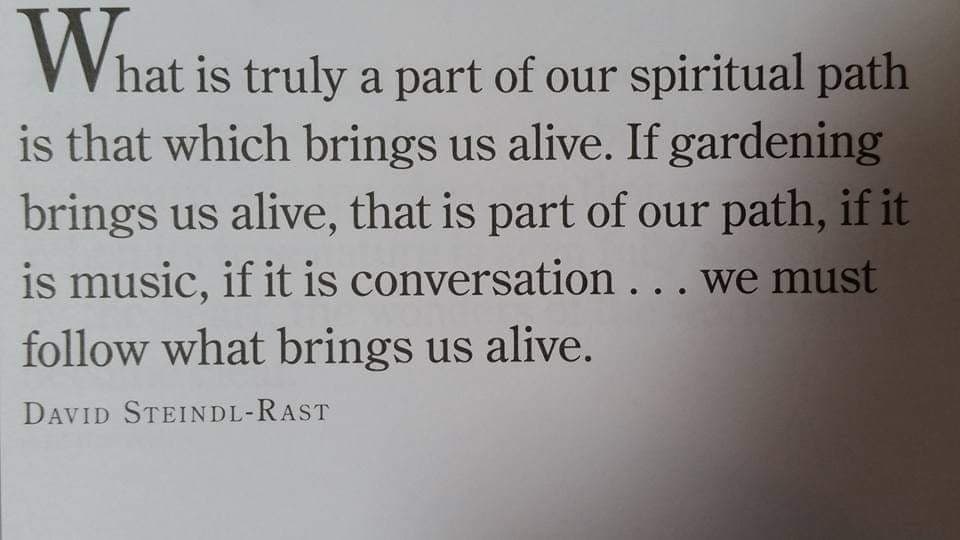
Mid-week special: What can singing do for your well-being?

I've been doing some research into well-being as part of expanding the work we share to support our singing within my mentoring group, Virtually Vocalise.
(Well-being is always a factor we include in our Voice-works Study Weekends too. NB - Spring event update - bookings are being made, don't leave it too late before securing your place if you've set your heart on attending. www.littlesoprano.co.uk/workshopevents)
-
relieves stress
-
stimulates the immune response
-
increases pain threshold
-
can impro...

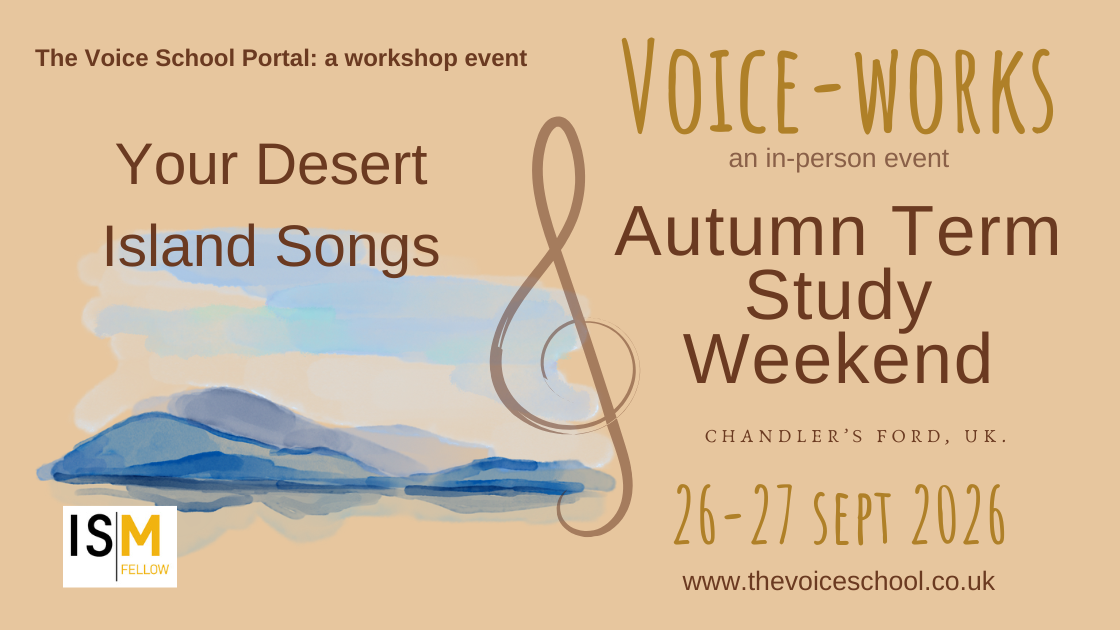
Your Desert Island Songs
26–27 September 2026 · Chandler’s Ford, Hampshire. Explore the songs that become part of who we are as singers, in the company of other curious classical singers.
Singer applications have now closed. Observer places are available.
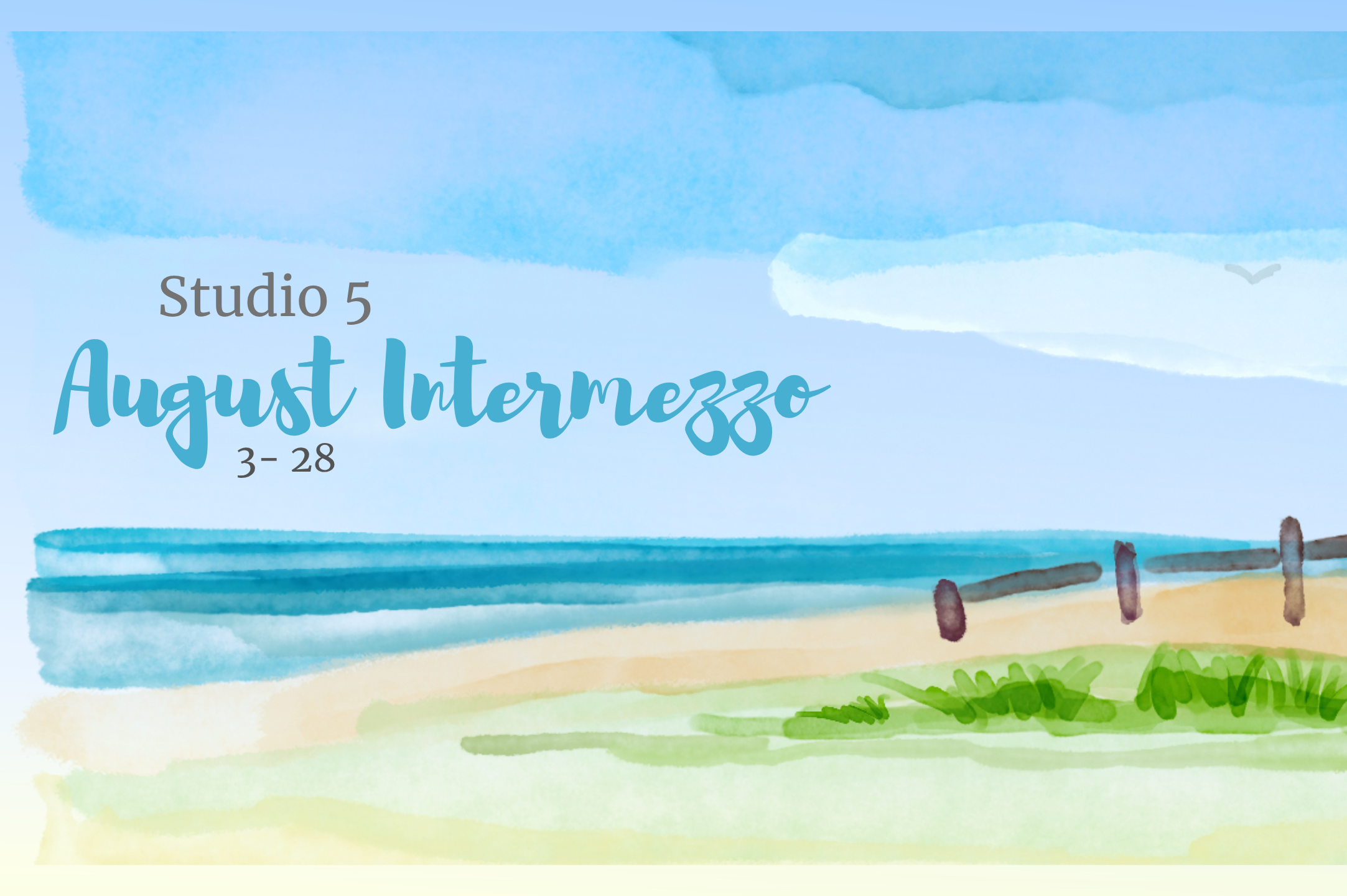
New! August Intermezzo
A short interval or pause between larger events.
Running from 3–28 August, this is a new kind of Studio 5 space for the holiday weeks between terms - an online Intermezzo where you can stay connected to your singing in a simple, practical, and flexible way, even if life is busy or if you’re away.
Alongside weekly material, I’ll set aside time each week for an open, informal Intermezzo chat — you can drop in to ask questions, share ideas. If you can’t make a live chat, you’ll still be able to send thoughts and questions into the group space for me to respond to during the week.
This August Intermezzo is the first of a new Studio 5 idea that will continue to appear during the spaces between terms across the academic year.
Repertoire that meets you where you are.
A curated, confidence-building guide for returning, rebuilding, or refining classical singers. Includes expert commentary, a clickable playlist, and clarity on how to choose songs that truly fit. Instant download.
The Classical Singer's Path
A new Substack series, written from the inside out - glimpses into my own life as a classical singer, and the way I think about the art we share. It is quieter than the bustle of The Voice School, a place for reflection, stories, and ideas that might travel with you into your own singing life.. It’s free to subscribe, and early support means a lot as I get it going. You’re warmly invited to join me there.

Featured in Feedspot
Ranked #29 in their Top 60 Singing Blogs — a lovely recognition of our reflective approach to singing.
Stay connected with new events and all updates!

Singing Basics Guide
Getting to grips with or making improvements to your singing and the methods to achieve progress are all far easier and more accessible than you think.
