
Build your singing from the ground up
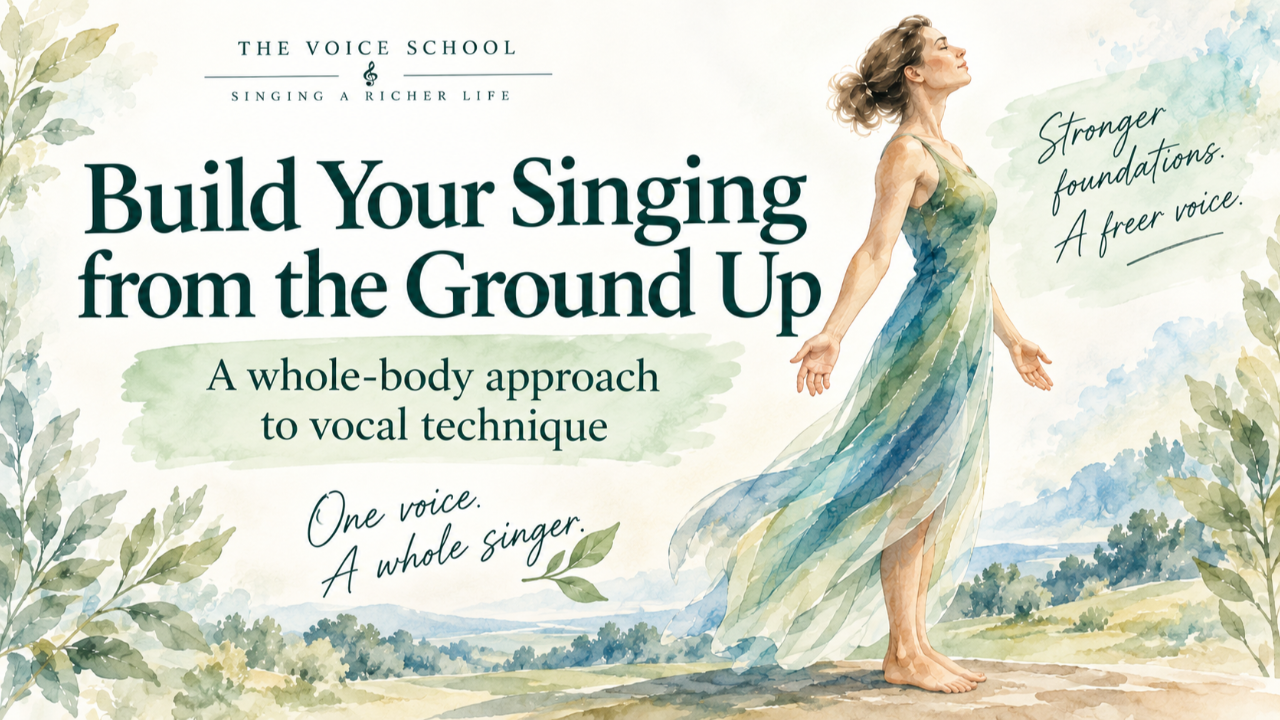
If you are thinking about singing posture, breath support, vocal technique, alignment, tension or how to sing with less effort, it is worth starting one step earlier than you might expect. Before asking how well you are breathing, where you are supporting, or what your voice is doing, ask a more fundamental question: how is your whole body organised for singing?
At the beginning of a new academic year, this seems a particularly good place to start.
Most of us return to our singing after the summer feeling a little rusty. Perhaps we haven't practised quite as regularly. Repertoire that felt secure in July needs finding again, and the voice may not respond immediately in quite the way we remember. It is very tempting at this point to start fixing things, when perhaps there is a more interesting place to begin.
The singer is the instrument
We can become very occupied with individual parts of vocal technique: the breath, the jaw, the tongue, the larynx, support, resonance. All of them ...
What should classical singers do between lessons?
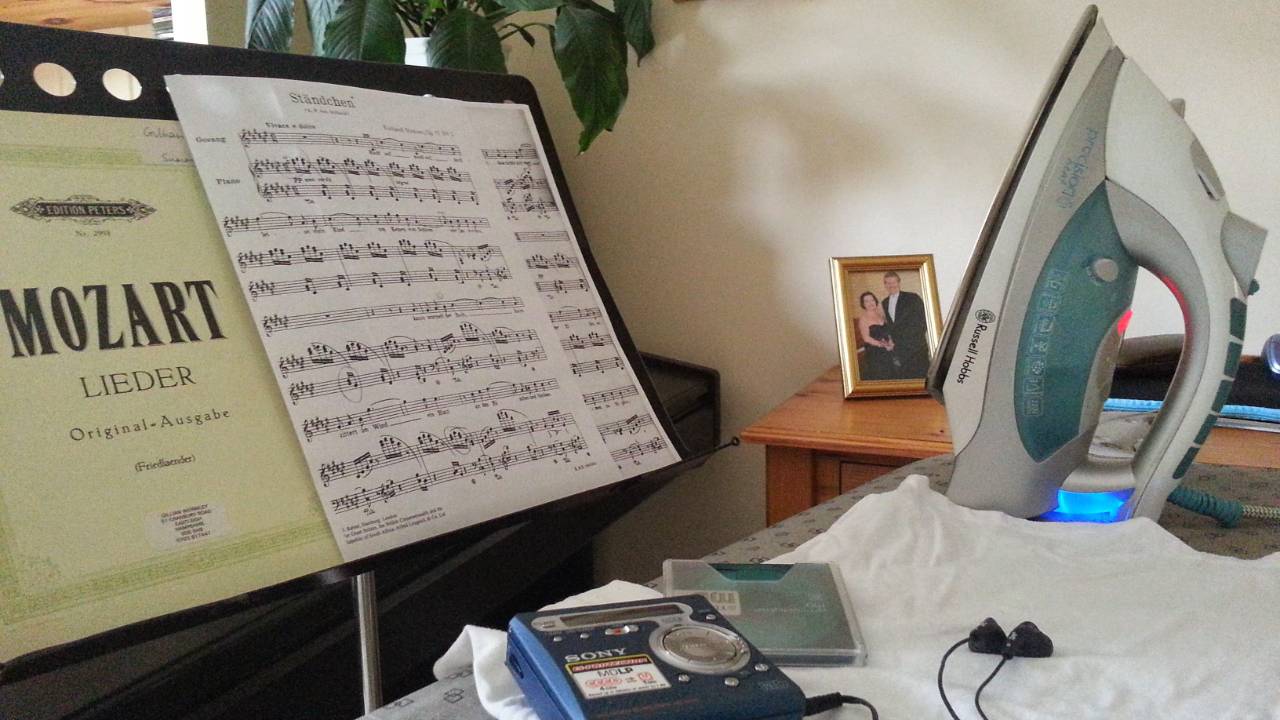
What should classical singers do between lessons?
Learning how to sing involves much more than the time we spend with a singing teacher. For adult classical singers, an important part of the learning process is discovering how to continue developing independently: how we practise, how we approach repertoire, what we listen for and how we make sense of our own discoveries between singing lessons.
This is something I talk about a great deal with singers. There can be an assumption that the serious work, the real progress, happens when the teacher is there. Yet so much of our development as musicians depends upon what we learn to do for ourselves, with good guidance to help us recognise what matters and where our curiosity might take us.
What should I actually be doing between lessons?
It sounds such a straightforward question.
For many years the answer might simply have been, “Practise.”
Of course we need to practise. Singing is a practical discipline, and there is no substitute f...
Stay connected with your singing this August

If you're an adult classical singer looking for a way to stay connected with your singing over the summer, my August Intermezzo may be just the thing. It isn't an online course and there isn't a programme to work through. Instead, it's an invitation to spend August in the company of other curious singers, exploring vocal technique, musicianship and the simple pleasure of singing, wherever you happen to be.
When the summer term comes to an end, I know many singers enjoy having a little more space in their diary. But that doesn't mean our interest in singing disappears. Quite the opposite. Without the usual routine of lessons and workshops, there's often a little more time to listen, to reflect and to notice things that become lost in the busyness of term-time.
That's really what my August Intermezzo is about.
Each week during August I'll be sharing a different theme, built around one carefully chosen video from my teaching archive. Alongside it you'll find one of my weekly postcards....
Beyond choir singing: exploring solo repertoire
Singing in a choir introduces thousands of people to wonderful music and provides friendship, structure and the pleasure of making music together. Many singers spend a lifetime enjoying exactly that. There is something deeply satisfying about being part of a larger sound, contributing your own voice to something that no one person could create alone.
But what if you find yourself wanting a little more?
Not more commitment. Not necessarily more performing. Just a deeper involvement, a discovery from within the music itself - and the workings of and connection with your own voice.
I think this is one of the reasons singing workshops, summer schools, and study weekends continue to hold such appeal. They create opportunities to step a little closer to the repertoire we love. To spend time with music in a different way. To listen. To observe. To have a go.
I have sat in enough workshop rooms to know that some of the most memorable moments happen when a singer decides to take that step. ...
Solo singing and shared experience

Many aspiring adult classical solo singers spend a lot of time working on their voice and practising alone. Practice happens at home, repertoire is learned in isolation, and vocal technique is something pieced together over time, often without fully understanding how it all fits together.
That is a completely natural way to begin.
But it does raise a question, sooner or later, and it is one I recognise very well from my own singing and from working with singers over many years: how do you know if what you are doing is actually helping?
The answer rarely comes from doing more of the same on your own. It comes from experience, and more specifically, from shared experience.
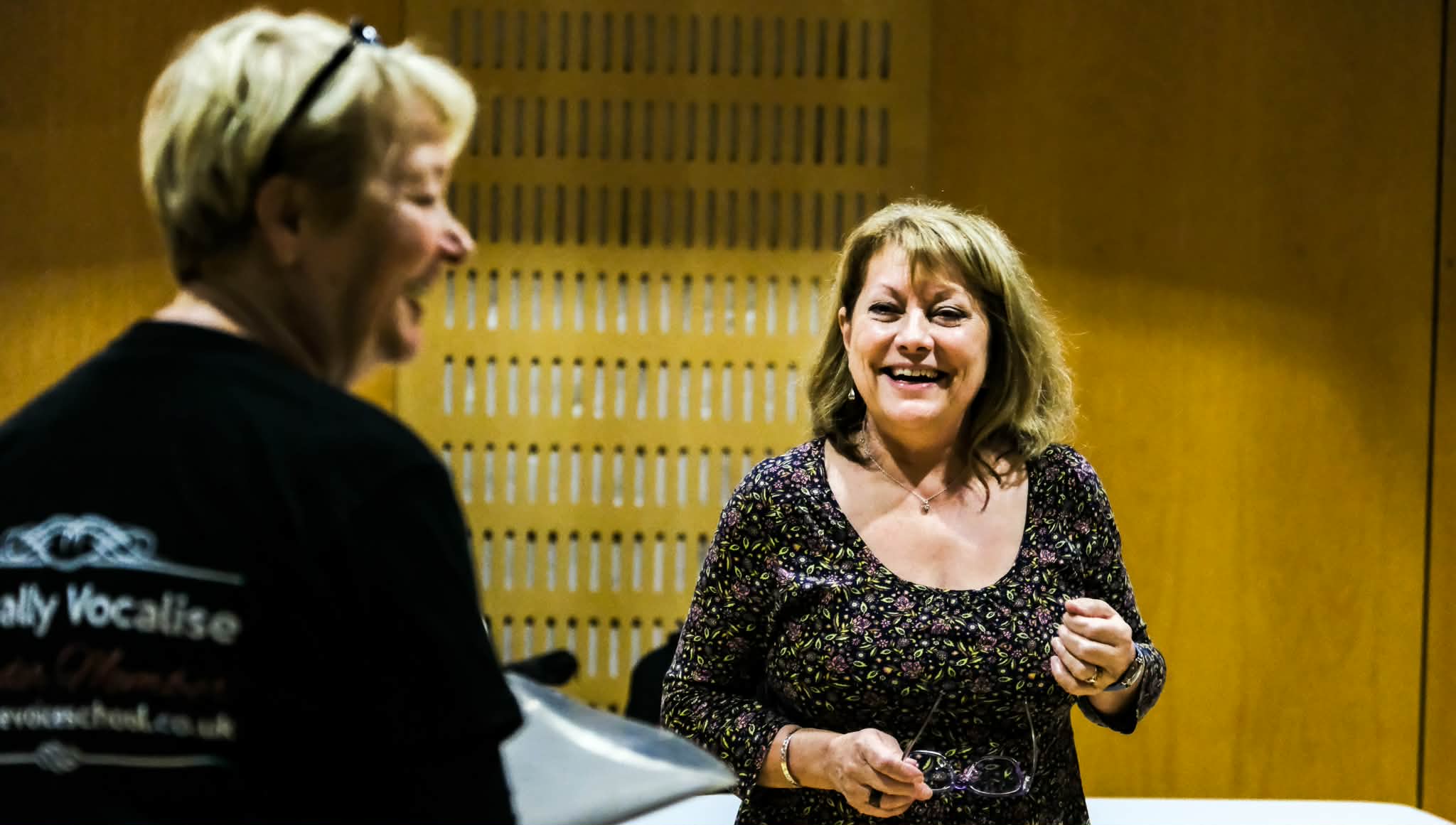
I see this every time singers come together, whether over a full weekend workshop or in a smaller setting, or even online. Progress shifts, not because anything dramatic has been added, but because the context has changed. As a solo singer, you are no longer relying only on your own internal navigation system.
Y...
Why your singing voice feels inconsistent.

Why does your singing voice feel inconsistent from one day to the next, and why does it sometimes seem as though nothing is improving?
This is one of the most common questions singers ask, and it often leads to the assumption that something is missing or that a breakthrough is just out of reach. That with the right exercise, the right explanation, or the right moment of understanding, things will finally begin to work properly.
The honest answer is that singing rarely develops like that. It is not built on sudden beginnings or decisive turning points, but on patterns of use over time. What makes the difference is not a single moment of insight, but how regularly the voice is brought into action and how consistently the fundamentals are revisited. It is less a matter of beginning, and more a matter of stepping through into a different kind of experience, where the work is already underway and simply needs to be continued.
The voice responds to use, not intention
The voice is a physi...
How to keep your singing voice strong over time

Many adult singers ask some version of this question: How do I keep my singing voice strong as the years go by? Is it simply a matter of age, or is there something more within our control?
The honest answer is that strength in the voice is rarely about age alone. It is far more often about how the voice has been used, how regularly it has been exercised, and whether the fundamentals have been properly understood.
I have been singing and studying seriously for decades, and I am still preparing and presenting repertoire myself. I still think carefully about vocal load. I still look at range, tessitura, stamina, and recovery time before committing to a programme. Not because I am fragile, but because I understand that the voice responds to patterns. It responds to repetition. It responds to intelligent use.
The same is true at forty as it is at seventy.
The voice responds to use, not to wishful thinking
Like any coordinated muscular system, the voice strengthens through regular, th...
Finding your way after a singing break
January and early February can feel oddly suspended for singers. The year has begun, but the direction is not always clear. Many people return to their music after a concentrated period of activity, or after time away over Christmas, and find themselves unsure of the next sensible step.
After a focused period of singing, it is rarely helpful to rush straight into new repertoire or set immediate goals. More often, there is a quieter phase where ideas settle, choices begin to surface, and a sense of direction gradually forms. This is not lost time. It is where thoughtful planning begins.
One of the most underestimated aspects of singing development is what happens between events. Once the intensity of shared work has passed, the real task is deciding how to carry that experience forward in a way that fits your life, your energy, and your current level of readiness. That requires honesty rather than ambition.
Preparation matters far more than complexity. It does not matter whether your...
Your singing: planning the year ahead.

For many singers, January and February are not a time of instant momentum.
After Christmas, routines have shifted, energy feels steadier rather than expansive, and singing can feel slightly unfamiliar. This is normal. The voice hasn’t gone anywhere, but it may need time to re-settle after weeks of different rhythms, sleep patterns, and demands. Expecting to feel immediately “back” often creates unnecessary pressure, particularly in mid-winter.
One of the most common difficulties at this point in the year is the temptation to rush. Singers can feel they ought to be back where they were in the autumn, as though continuity were something that could be switched on again at will. In reality, returning to singing works far better when it is approached as a process of re-orientation rather than recovery; listening first, noticing what is present now, and allowing habits to re-form without strain.
This early part of the year often lends itself to preparation. That may mean choosing repertoi...
How to Build a Consistent Singing Practice: Real Support for Adult Classical Singers
Most adult classical singers aspire to a sense of genuine progress. Not perfection. Not pressure. Just a sense that their voice is growing, supported, and part of a rhythm they can trust.
But building a consistent practice is rarely about willpower or doing more. If it were, far more singers would feel confident in their progress. What people really need is a way of working that fits the reality of their lives.
After many years of running workshops, weekends, teaching sessions and in-person events, I see the same pattern again and again: a regular singing practice grows from a foundation of rhythm, clarity, and support.
A rhythm that feels workable
A good singing rhythm is not rigid. It does not require singing every day or following a strict routine. It has to match your life and energy. When you find a rhythm you can return to week after week, your practice becomes realistic rather than idealistic. That is when consistency begins.
Learning needs time
Singing develops through at...

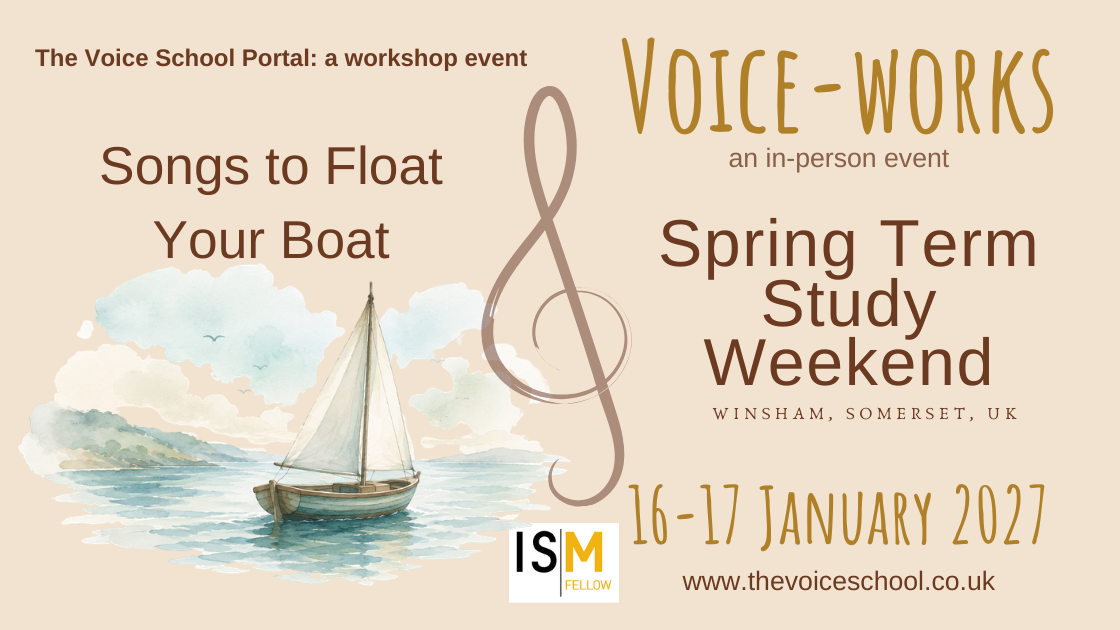
Your Desert Island Songs
16–17 January 2027 · Winsham, Somerset.
Revisit the songs in your repertoire and explore what continues to inspire, challenge and reward you, in the company of other curious classical singers.
Applications to sing are now open. Observer places are also available.
New! August Intermezzo
A short interval or pause between larger events.
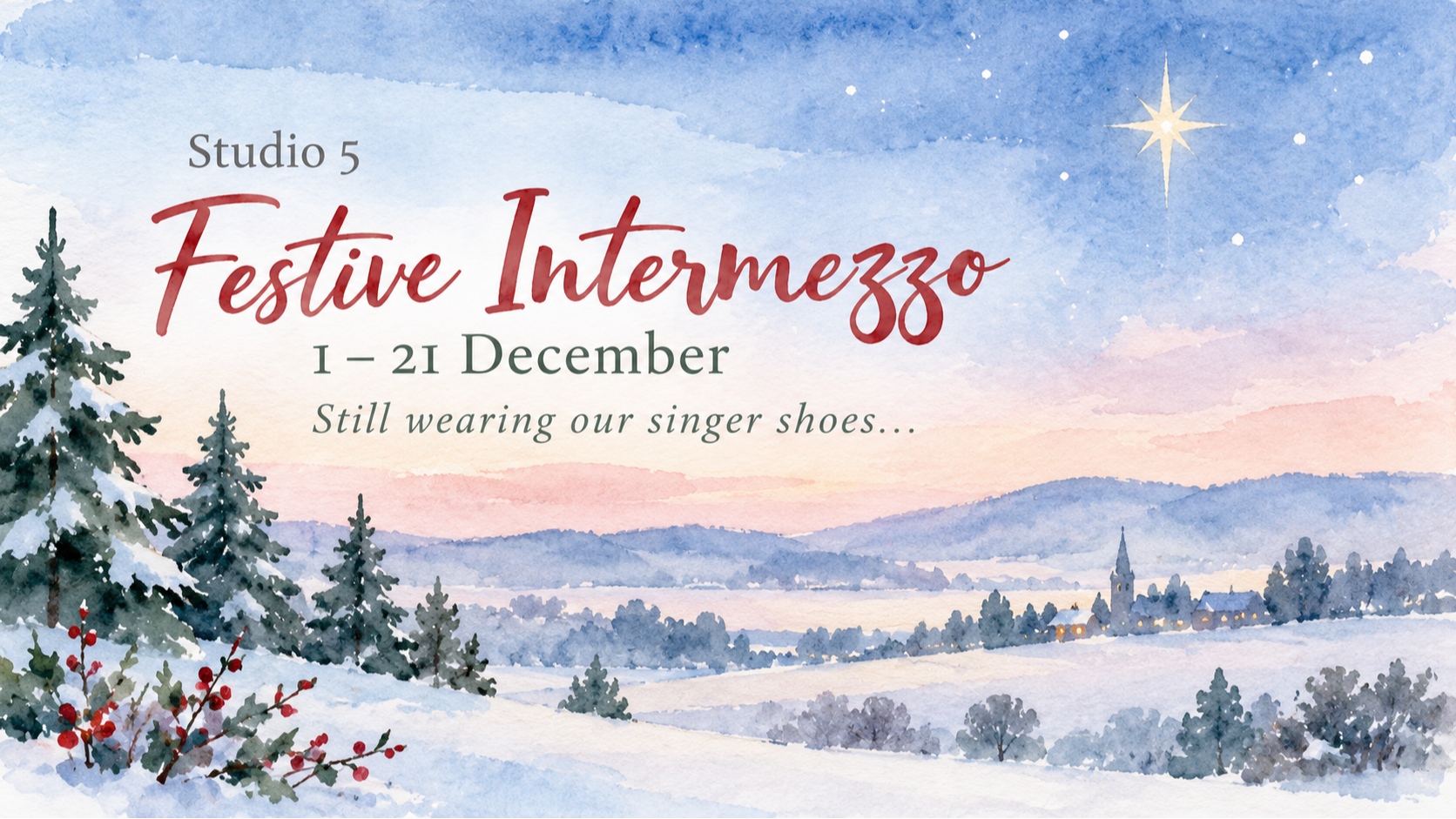
Following the success of the August Intermezzo, the next Studio 5 Intermezzo will have a festive flavour. Running through the first three weeks of December, it will offer a flexible way to stay connected to your singing as the autumn term draws to a close and Christmas approaches.
The Festive Intermezzo is now being prepared, with full details coming soon.
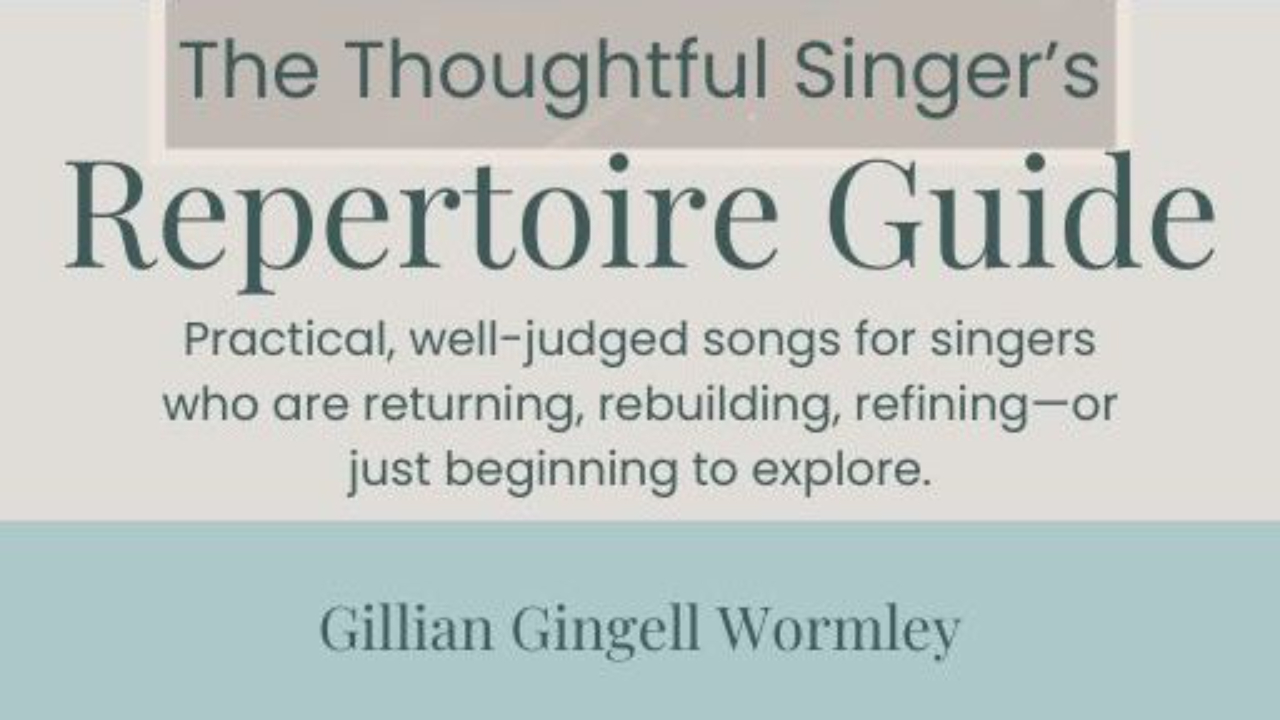
Repertoire that meets you where you are.
A curated, confidence-building guide for returning, rebuilding, or refining classical singers. Includes expert commentary, a clickable playlist, and clarity on how to choose songs that truly fit. Instant download.
The Classical Singer's Path
A new Substack series, written from the inside out - glimpses into my own life as a classical singer, and the way I think about the art we share. It is quieter than the bustle of The Voice School, a place for reflection, stories, and ideas that might travel with you into your own singing life.. It’s free to subscribe, and early support means a lot as I get it going. You’re warmly invited to join me there.

Featured in Feedspot
Ranked #29 in their Top 60 Singing Blogs — a lovely recognition of our reflective approach to singing.
Stay connected with new events and all updates!

Singing Basics Guide
Getting to grips with or making improvements to your singing and the methods to achieve progress are all far easier and more accessible than you think.
