
Solo singing and shared experience
Many aspiring adult classical solo singers spend a lot of time working on their voice and practising alone. Practice happens at home, repertoire is learned in isolation, and vocal technique is something pieced together over time, often without fully understanding how it all fits together.
That is a completely natural way to begin.
But it does raise a question, sooner or later, and it is one I recognise very well from my own singing and from working with singers over many years: how do you know if what you are doing is actually helping?
The answer rarely comes from doing more of the same on your own. It comes from experience, and more specifically, from shared experience.
I see this every time singers come together, whether over a full weekend workshop or in a smaller setting, or even online. Progress shifts, not because anything dramatic has been added, but because the context has changed. As a solo singer, you are no longer relying only on your own internal navigation system.
You begin to hear other voices. You notice how someone else approaches the same phrase. You recognise something in another singer that you have struggled with too.
And suddenly, what felt uncertain starts to come into focus. Understanding, progress shifts.
It is not about comparison. It is about recognition. That moment when you realise that what you are experiencing is not unique to you, and that it can be worked with, is often the point at which things begin to change.
I remember this very clearly in my own early singing life. Some of the most important changes did not come from trying to perfect something in isolation, but from being with other singers, listening, responding, and gradually understanding what was happening in a much more complete way.
That is why I often say to singers who attend my workshops that it's not necessary to arrive 100% ready. In fact, it is often better if you don’t. Learn by doing, by noticing, instead.
There is tremendous value in simply coming ready to observe, to sit within a session, to listen carefully, and to begin to understand how vocal things unfold. It takes the pressure away, and it allows you to see and hear what is going on without having to manage everything at once.
From there, the next step tends to feel much more possible.
And although nothing quite replaces being physically present with other singers, the same principle applies online. What matters is that you are no longer working entirely on your own, and that you are placing yourself within something where singing is happening regularly and with intention.
Over time, that begins to change how you understand your own voice.
It becomes less about trying to control everything in isolation, and more about recognising what is happening, responding to it, and allowing your understanding to grow through experience.
If you are at the beginning of this, or returning to singing after time away, it is worth remembering that you do not need to have everything in place before you take part. You don’t need to know exactly what you are stepping into. You need to step into something that allows you to grow.
You can begin by listening. You can begin by observing. You can begin exactly where you are.
Learn by doing, by joining in.
 If you would like to see how this works in practice, the Voice School Portal Notice Board is brimming with ideas and current workshop opportunities to take part, both in person and online, along with the overall shape of the academic year and beyond.
Curious about singing basics? Let's get you started with the right learning tools.
Download my free need-to-know vocal essentials guide for singers, vocal technique principles simply explained.

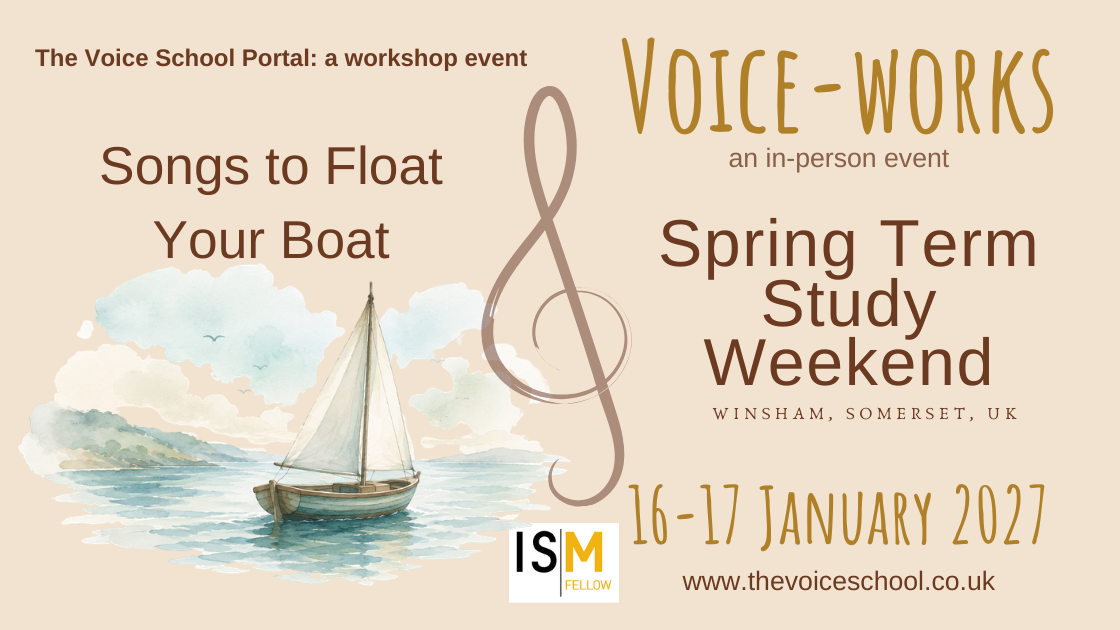
Songs to Float Your Boat
16–17 January 2027 · Winsham, Somerset.
Revisit the songs in your repertoire and explore what continues to inspire, challenge and reward you, in the company of other curious classical singers.
Applications to sing are now open. Application deadline: 5 December, just one place remaining.
Observer places are also available.
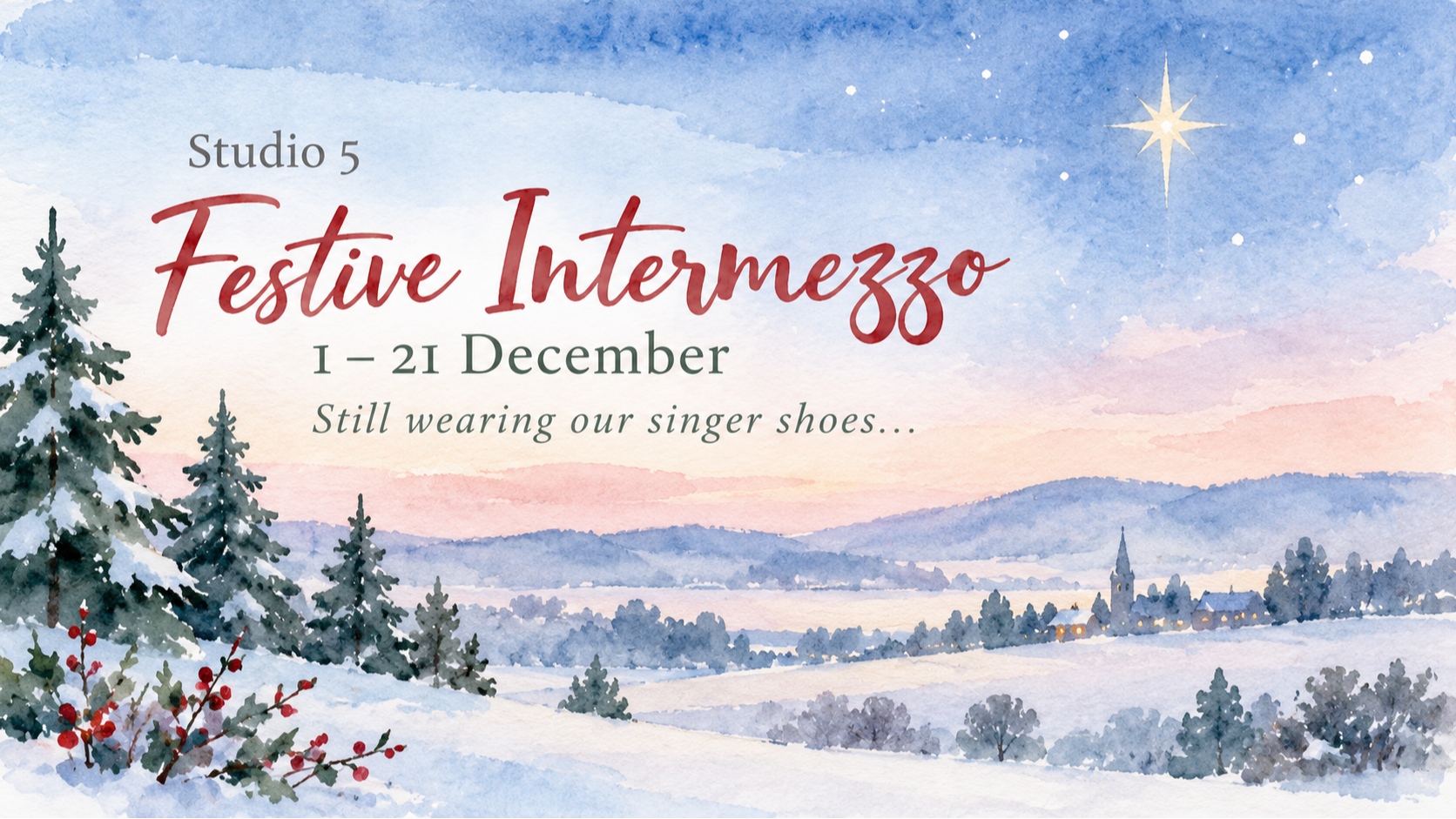
New! Festive Intermezzo
A short interval or pause between larger events.
Following the success of the August Intermezzo, the next Studio 5 Intermezzo will have a festive flavour. Running through the first three weeks of December, it will offer a flexible way to stay connected to your singing as the autumn term draws to a close and Christmas approaches.
The Festive Intermezzo is now being prepared, with full details coming soon.
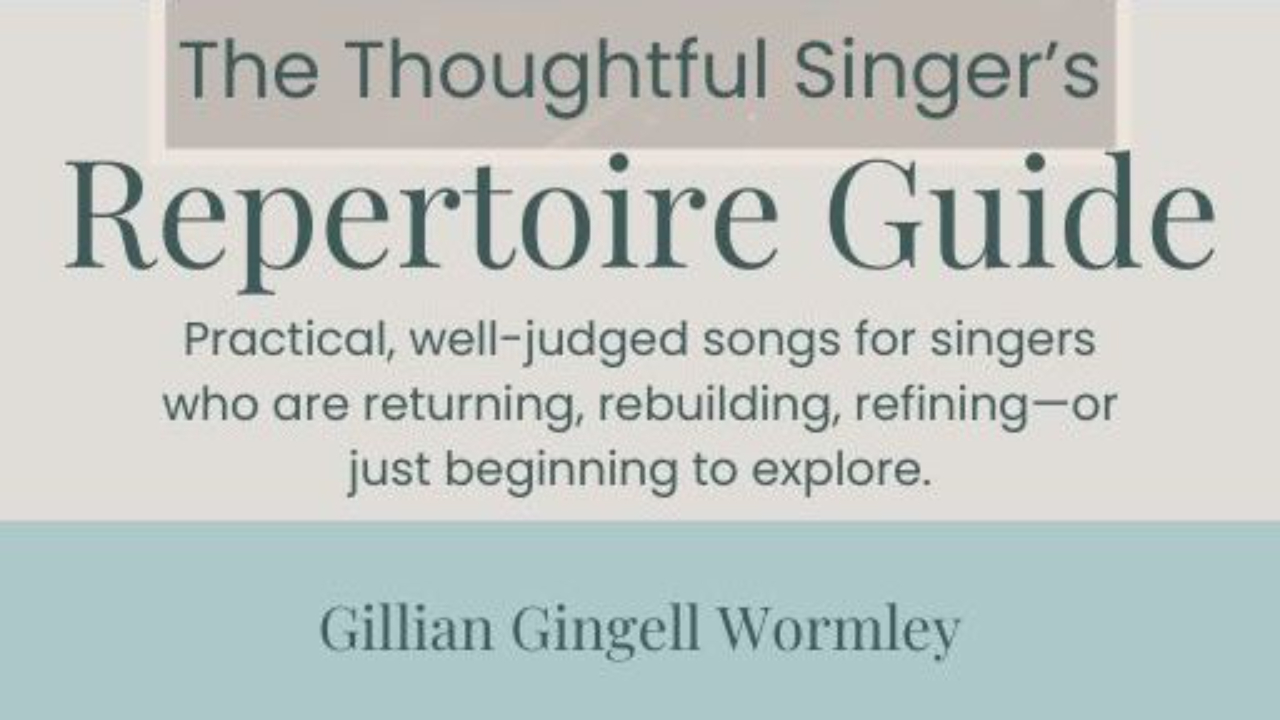
Repertoire that meets you where you are.
A curated, confidence-building guide for returning, rebuilding, or refining classical singers. Includes expert commentary, a clickable playlist, and clarity on how to choose songs that truly fit. Instant download.
The Classical Singer's Path
A new Substack series, written from the inside out - glimpses into my own life as a classical singer, and the way I think about the art we share. It is quieter than the bustle of The Voice School, a place for reflection, stories, and ideas that might travel with you into your own singing life.. It’s free to subscribe, and early support means a lot as I get it going. You’re warmly invited to join me there.

Featured in Feedspot
Ranked #29 in their Top 60 Singing Blogs — a lovely recognition of our reflective approach to singing.
Stay connected with new events and all updates!

Singing Basics Guide
Getting to grips with or making improvements to your singing and the methods to achieve progress are all far easier and more accessible than you think.
