
Why your singing voice feels inconsistent.

Why does your singing voice feel inconsistent from one day to the next, and why does it sometimes seem as though nothing is improving?
This is one of the most common questions singers ask, and it often leads to the assumption that something is missing or that a breakthrough is just out of reach. That with the right exercise, the right explanation, or the right moment of understanding, things will finally begin to work properly.
The honest answer is that singing rarely develops like that. It is not built on sudden beginnings or decisive turning points, but on patterns of use over time. What makes the difference is not a single moment of insight, but how regularly the voice is brought into action and how consistently the fundamentals are revisited. It is less a matter of beginning, and more a matter of stepping through into a different kind of experience, where the work is already underway and simply needs to be continued.
The voice responds to use, not intention
The voice is a physical system, and like any coordinated system in the body, it responds to use. Not occasional use, and not use under pressure, but regular, repeated contact.
If singing happens in short bursts, separated by long gaps, the body has to keep finding its way back into the work. This is often experienced as inconsistency, but it is more accurately a disruption of pattern. The coordination has not disappeared, but it has not been maintained.
This is why singers often feel that they are “starting again”, even when they have been singing for years. In reality, they are not starting from nothing, but they are having to re-establish something that has not been kept active.
Why nothing suddenly clicks into place
There is a persistent idea that at some point everything will come together, that breath will organise itself, tone will feel free, and the voice will behave reliably from then on. In practice, this is not how vocal technique develops.
Breath, onset, support, and resonance are not problems to be solved once. They are coordinations that need to be experienced repeatedly, and they become more accessible over time because they have been reinforced through use, not because they have been fixed in a single moment.
When something does not go as expected, particularly in a performance or a moment that feels important, it can seem as though the voice has suddenly let you down. In reality, what happens in that moment is usually a reflection of what has been in place leading up to it. The voice does not suddenly behave differently on the day; it responds to the patterns it has been given. This is not a cause for criticism, but it is useful information, because it allows you to trace things back and recognise what has or has not been consistently established.
The real role of routine
Routine is often misunderstood as something rigid or overly disciplined, but in singing, it serves a very practical purpose. A regular pattern of contact with the voice allows the body to recognise what it is being asked to do, reducing the effort needed to organise breath and sound and making coordination more accessible when it is needed.
Without that regular contact, even well-understood ideas remain unreliable in practice, because the body has not had enough opportunity to experience them often enough. This is why shorter, more frequent sessions are usually more effective than occasional longer ones, as they maintain the thread of the work and allow the voice to respond with greater consistency over time.
Fundamentals are where this work lives
It is tempting to look beyond the basics, especially when progress feels slow. But the fundamentals are not a stage to move through and leave behind. They are the mechanism by which the voice continues to function over time.
Breath organisation, alignment, onset, resonance and clear articulation are not separate topics. They are the ongoing work. When they are revisited regularly, the voice tends to become more dependable. When they are left aside, singers often find themselves working harder for fewer results.
This is not about going backwards. It is about maintaining the conditions that allow the voice to work.
A practical place to begin, or to return
If you need somewhere to re-establish that regular contact, I have gathered a generous set of vocal technique session videos from my archive. These videos explore how classical singing actually works — how breath, support, coordination, and sound come together — so that what you’re doing begins to feel more logical and reliable.
You do not need to work through them in order. The value lies in coming back, noticing, and allowing the body to reconnect with the work.
Continuing the work
There is no single point at which singing begins properly, and no moment at which everything is permanently in place. What there is, instead, is the opportunity to continue.
Each time you return to the voice, even briefly, you are reinforcing something that already exists. Over time, that continuity becomes the thing you rely on, not a sudden change, but a pattern that holds.
If you would like to explore further, you will find the Portal Notice Board just above, where current work, resources and upcoming events are gathered together. It is a good place to return to from time to time, particularly if you are looking for a way to stay connected to your singing.
Curious about singing basics? Let's get you started with the right learning tools.
Download my free need-to-know vocal essentials guide for singers, vocal technique principles simply explained.

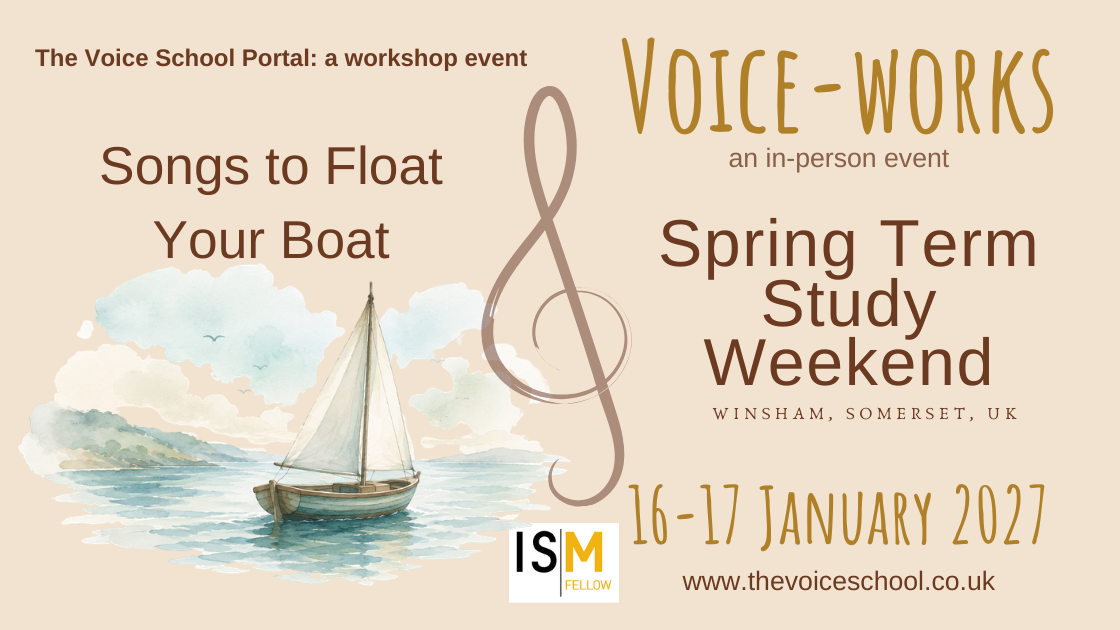
Your Desert Island Songs
16–17 January 2027 · Winsham, Somerset.
Revisit the songs in your repertoire and explore what continues to inspire, challenge and reward you, in the company of other curious classical singers.
Applications to sing are now open. Observer places are also available.
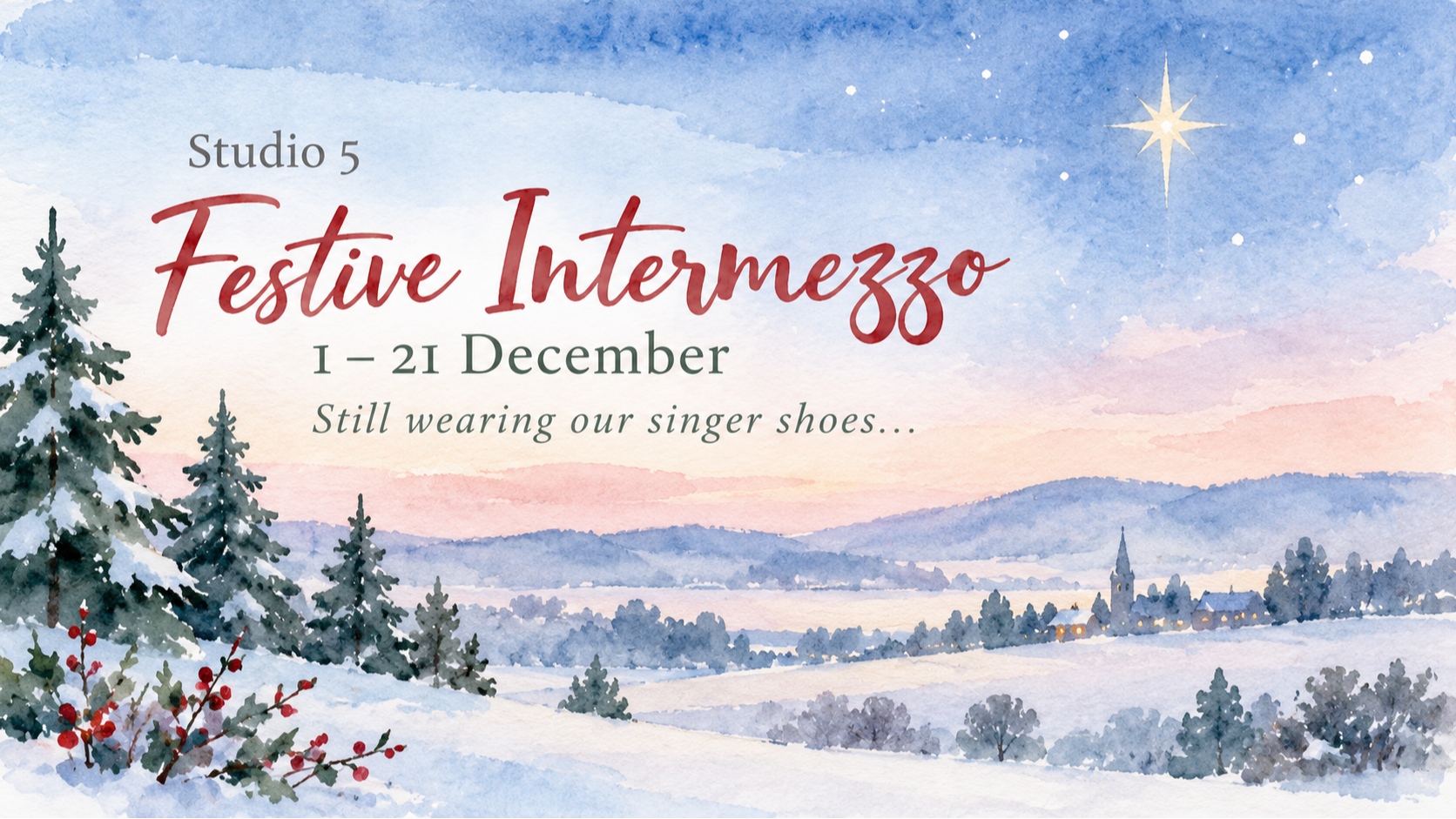
New! August Intermezzo
A short interval or pause between larger events.
Following the success of the August Intermezzo, the next Studio 5 Intermezzo will have a festive flavour. Running through the first three weeks of December, it will offer a flexible way to stay connected to your singing as the autumn term draws to a close and Christmas approaches.
The Festive Intermezzo is now being prepared, with full details coming soon.
Repertoire that meets you where you are.
A curated, confidence-building guide for returning, rebuilding, or refining classical singers. Includes expert commentary, a clickable playlist, and clarity on how to choose songs that truly fit. Instant download.
The Classical Singer's Path
A new Substack series, written from the inside out - glimpses into my own life as a classical singer, and the way I think about the art we share. It is quieter than the bustle of The Voice School, a place for reflection, stories, and ideas that might travel with you into your own singing life.. It’s free to subscribe, and early support means a lot as I get it going. You’re warmly invited to join me there.

Featured in Feedspot
Ranked #29 in their Top 60 Singing Blogs — a lovely recognition of our reflective approach to singing.
Stay connected with new events and all updates!

Singing Basics Guide
Getting to grips with or making improvements to your singing and the methods to achieve progress are all far easier and more accessible than you think.
