
How do you know if your classical singing technique is working?
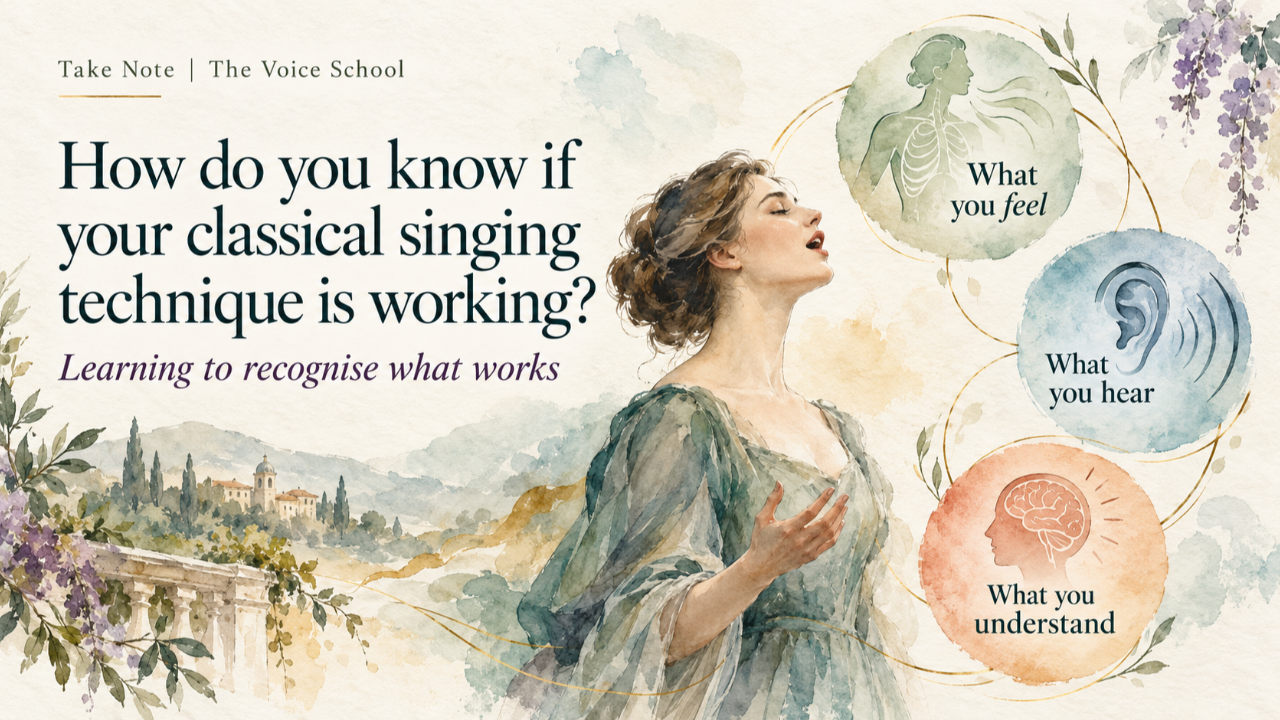
How do you know if your classical singing technique is working?
Since the beginning of the autumn term, I've been giving a good deal of thought to the way we learn to recognise what is actually happening when we sing. It's something that comes up regularly in my teaching, particularly when singers are working with familiar repertoire and beginning to question some of the things they've always taken for granted.
How do we know when our classical singing technique is working well? What are we listening for, what should we be feeling, and how reliable are the judgements we make about our own voices?
These are interesting questions, and not necessarily as straightforward as they might first appear. After all, the business of learning to sing involves much more than simply producing a pleasing sound. There is an extraordinary amount of physical coordination taking place, much of it beyond our immediate awareness, and we have to learn how to make sense of the information our bodies are giving us.
As a teacher, I frequently encounter singers who are convinced that something has gone wrong because a particular phrase didn't feel quite as they expected. They may immediately begin to question the breath, the support, the vowel or some other aspect of their technique. Yet the sound reaching my ears may be telling a rather different story. Equally, there are occasions when a singer feels perfectly comfortable with what they're doing, unaware of a familiar habit that is actually making the whole process more difficult than it needs to be.
And therein lies one of the fascinating challenges of learning to sing. We are both the musician and the instrument, attempting to understand something that we cannot observe from the outside in quite the same way as somebody listening to us.
What can we learn from our own observations?
I have always encouraged singers to become inquisitive about their technique, to ask questions and to be prepared to experiment. But there's an important difference between observing what happens and immediately deciding that something needs to be corrected.
Imagine that you're working on a familiar song. There's a phrase that has never felt particularly secure, perhaps involving an awkward entry, a long musical line or a passage that seems to require rather more effort than you would like. You sing it, become dissatisfied with the result and immediately try something different. Perhaps you take a bigger breath, adjust your jaw, or make a determined effort to increase your support.
But have you actually discovered what caused the difficulty in the first place?
It may be that the physical preparation needs attention, but equally the problem could lie in your understanding of the music. Is the rhythm absolutely secure? Have you established a reliable internal pulse before you begin? Are you anticipating the musical direction of the phrase, or are you so occupied with getting through the notes that the physical business of singing becomes increasingly complicated?
I've seen time and again how a little more attention to musicianship can transform the way a singer approaches a technical difficulty. The two are inseparable, of course, but it is surprisingly easy to become so preoccupied with the mechanics of producing the voice that we overlook the musical demands we're asking it to fulfil.
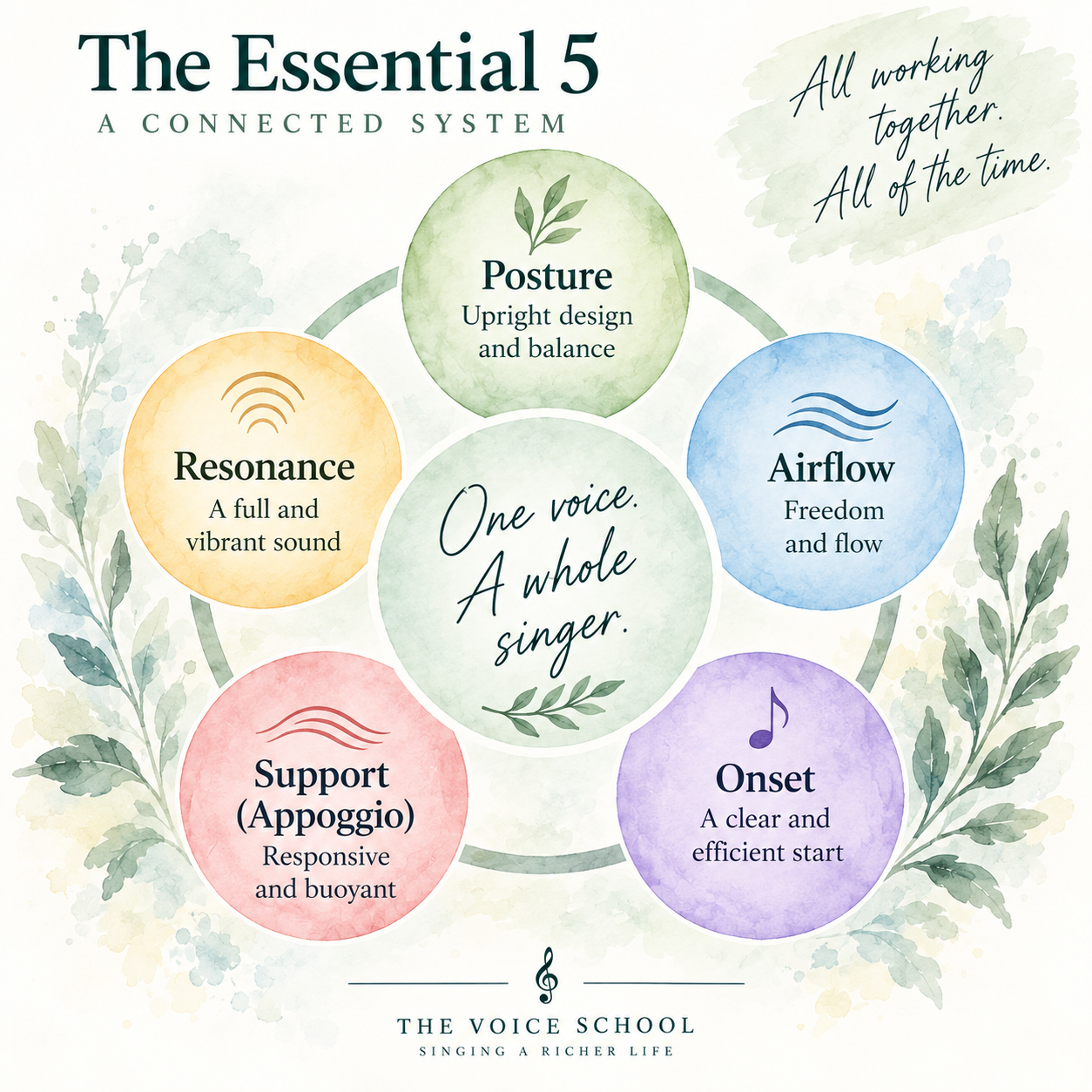
This is where having a reliable understanding of vocal technique becomes invaluable. My teaching is founded on what I call the Essential Five: Posture, Airflow, Onset, Support/Appoggio, and Resonance. These provide useful points of reference as we investigate how the voice works, helping us recognise connections between different physical activities rather than treating every vocal difficulty as an isolated problem.
But the objective is not to accumulate more and more things to think about while we sing! Quite the opposite. The better we understand these fundamental relationships, the more effectively we can prepare ourselves for singing, recognising the conditions that help and learning to dispense with unnecessary interference.
Recognising progress, even when it isn't immediately obvious
One of the most rewarding aspects of teaching is witnessing that moment when a singer begins to recognise something for themselves. Perhaps a familiar phrase suddenly feels less demanding, the beginning of a note becomes more reliable, or they discover that a passage they previously found difficult can be repeated with greater consistency.
“From one attempt to the next, Gillian led each one of us to the joys of singing more freely.”
The important part of that discovery isn't simply that something sounded better on one particular occasion. It's beginning to understand why it worked, recognising what contributed to the result and developing the ability to reproduce it without continually searching for another solution.
This is also where recordings can be so revealing. Listening back to our singing gives us another perspective, one that may challenge our immediate physical impressions. Something that felt unfamiliar at the time may sound perfectly satisfactory, while a passage we thought was secure might reveal a small inconsistency that deserves further attention.
Neither experience invalidates the other. Our physical sensations and the sound we hear are different sources of information, and gradually learning to interpret them is part of developing a more dependable understanding of our own instrument. The observations of an experienced teacher add another dimension, helping us make connections that might otherwise escape our notice.
I've been particularly interested recently in what happens when singers revisit repertoire they know well. There is something enormously valuable about returning to a song after several months, or even several years, and discovering that our understanding of it has changed. The music itself hasn't altered, but we have. Our technical knowledge may be more developed, our musical judgement more discerning, and our awareness of familiar physical habits considerably sharper.
A period away from regular singing can bring similar discoveries. We may initially feel that some of our former confidence or coordination has deserted us, but previous learning doesn't simply vanish. The accumulated understanding is still there, even if we need a little time and thoughtful preparation to reconnect with it. Sometimes returning to the most familiar exercises and musical material reveals just how much we've actually learned.
Becoming a more independent singer
Of course, none of this happens overnight. Acquiring a reliable classical singing technique involves patience, repetition, good guidance and a willingness to examine familiar habits. There will always be new questions to ask, particularly as our repertoire develops and we encounter different musical and expressive demands.
But I think we can sometimes become so intent upon identifying the next thing to improve that we fail to acknowledge what is already working well.
That's worth considering. If every practice session becomes an exercise in finding fault, how do we learn to recognise success? How do we develop confidence in the things we have already understood, and begin to trust our ability to use them?
For me, this is one of the most important purposes of vocal study. I want singers to become increasingly knowledgeable about their own voices, not simply dependent upon somebody else telling them what to do next. I want them to recognise useful physical sensations, understand the relationship between technical preparation and musical intention, and become more discerning about the choices they make during practice.
There is a real pleasure in reaching the point where you can approach a familiar song with greater understanding, knowing that the essential foundations are in place and that you don't need to interfere with every detail of the process.
After all, we invest so much time in learning and refining our technique because we want to sing music, communicate through words and sound, and enjoy the extraordinary possibilities of the human voice.
And the better we understand how our singing works, the more of our attention becomes available for precisely that.
A little more from my archive
If you'd like to explore some of these principles in action, you might enjoy my YouTube video on classical singing basics, looking at physical awareness, technical preparation and applying what we've learned to our songs.
You can also explore current vocal study themes and opportunities through The Voice School Portal Notice Board.
Curious about singing basics? Let's get you started with the right learning tools.
Download my free need-to-know vocal essentials guide for singers, vocal technique principles simply explained.

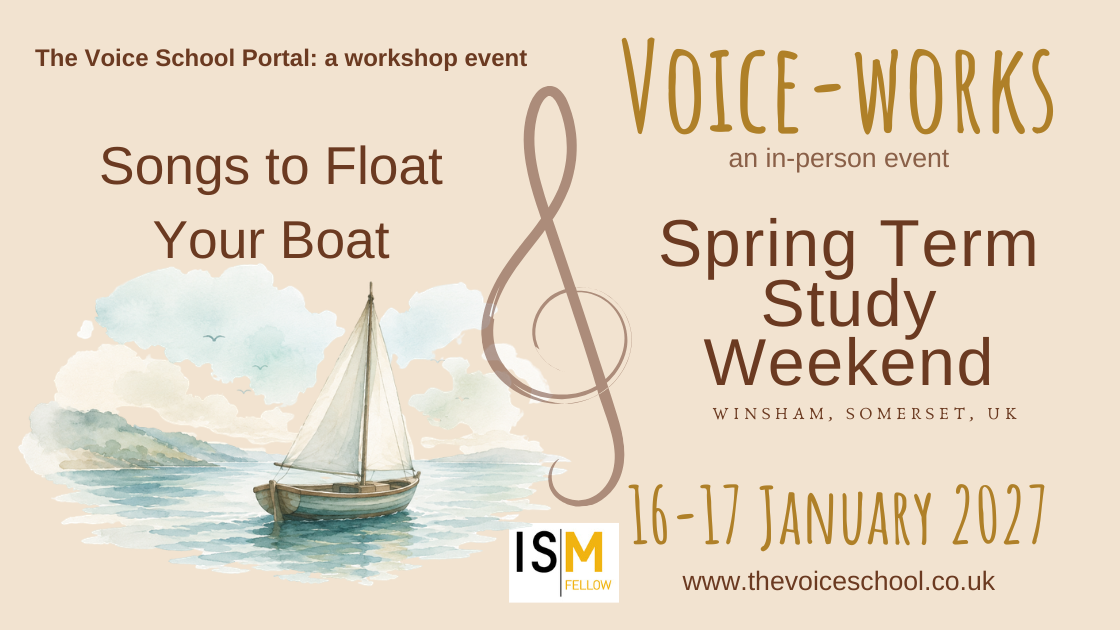
Songs to Float Your Boat
16–17 January 2027 · Winsham, Somerset.
Revisit the songs in your repertoire and explore what continues to inspire, challenge and reward you, in the company of other curious classical singers.
Applications to sing are now open. Application deadline: 5 December, just one place remaining.
Observer places are also available.

New! Festive Intermezzo
A short interval or pause between larger events.
Following the success of the August Intermezzo, the next Studio 5 Intermezzo will have a festive flavour. Running through the first three weeks of December, it will offer a flexible way to stay connected to your singing as the autumn term draws to a close and Christmas approaches.
The Festive Intermezzo is now being prepared, with full details coming soon.
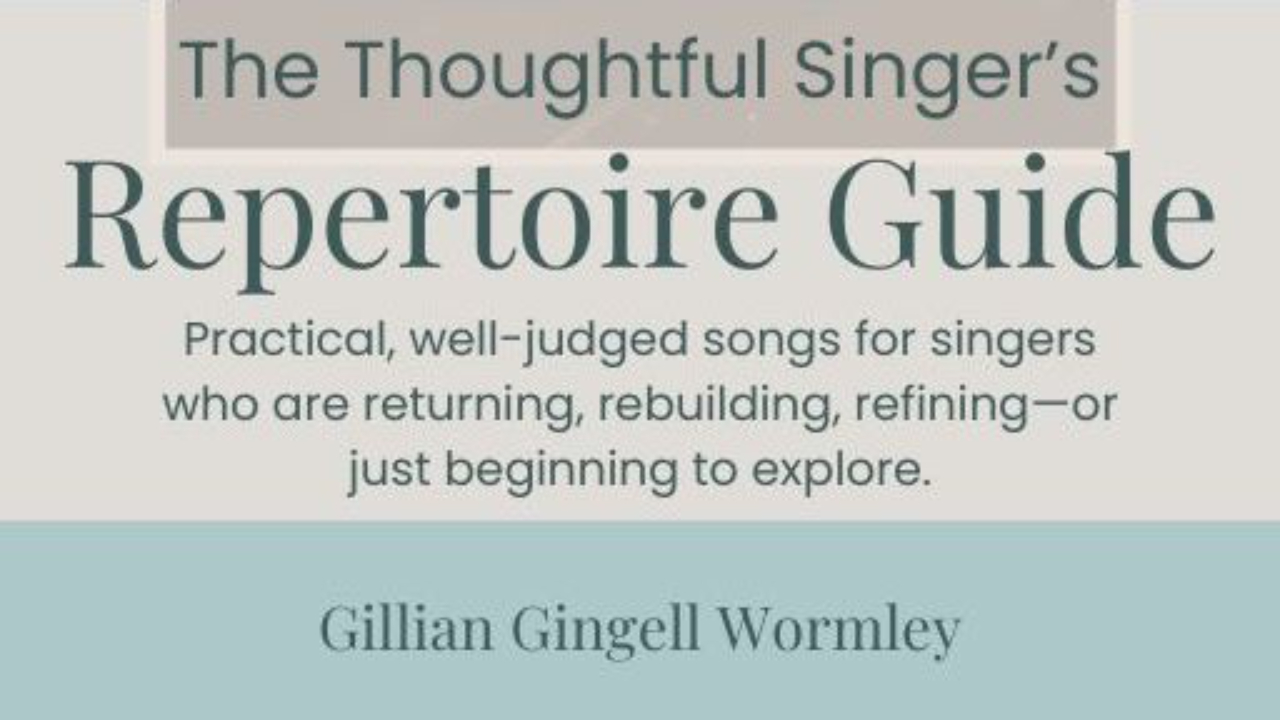
Repertoire that meets you where you are.
A curated, confidence-building guide for returning, rebuilding, or refining classical singers. Includes expert commentary, a clickable playlist, and clarity on how to choose songs that truly fit. Instant download.
The Classical Singer's Path
A new Substack series, written from the inside out - glimpses into my own life as a classical singer, and the way I think about the art we share. It is quieter than the bustle of The Voice School, a place for reflection, stories, and ideas that might travel with you into your own singing life.. It’s free to subscribe, and early support means a lot as I get it going. You’re warmly invited to join me there.

Featured in Feedspot
Ranked #29 in their Top 60 Singing Blogs — a lovely recognition of our reflective approach to singing.
Stay connected with new events and all updates!

Singing Basics Guide
Getting to grips with or making improvements to your singing and the methods to achieve progress are all far easier and more accessible than you think.
