
Beyond choir singing: exploring solo repertoire
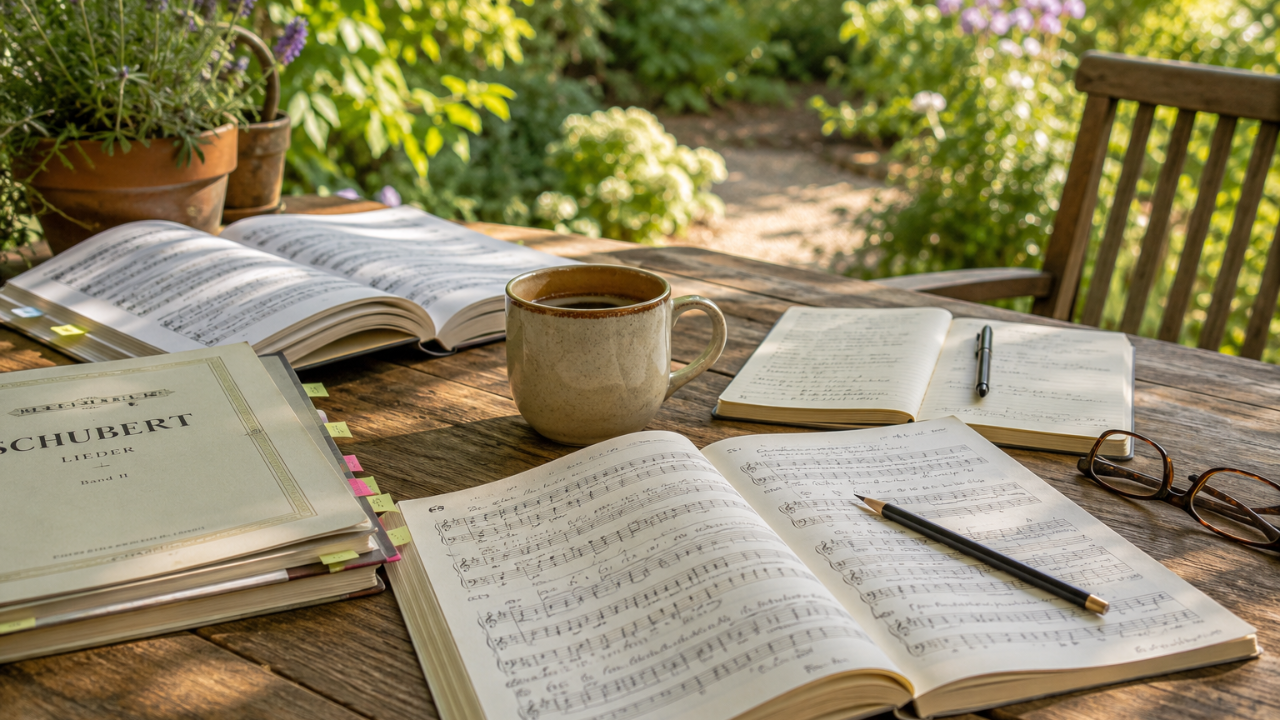
Singing in a choir introduces thousands of people to wonderful music and provides friendship, structure and the pleasure of making music together. Many singers spend a lifetime enjoying exactly that. There is something deeply satisfying about being part of a larger sound, contributing your own voice to something that no one person could create alone.
But what if you find yourself wanting a little more?
Not more commitment. Not necessarily more performing. Just a deeper involvement, a discovery from within the music itself - and the workings of and connection with your own voice.
I think this is one of the reasons singing workshops, summer schools, and study weekends continue to hold such appeal. They create opportunities to step a little closer to the repertoire we love. To spend time with music in a different way. To listen. To observe. To have a go.
I have sat in enough workshop rooms to know that some of the most memorable moments happen when a singer decides to take that step. Not because everything suddenly becomes easy, and not because they immediately discover hidden talents, but because something changes in the way they think about themselves. A singer who arrived expecting simply to listen finds themselves exploring a song. Somebody who has always assumed solo repertoire belongs to more experienced singers begins to realise that perhaps it isn't quite so out of reach after all.
That is where things become interesting.
The challenge, of course, is that there is rarely enough time in a single workshop or summer school to explore everything that singing involves. A tutor may introduce an idea. A piece of repertoire may reveal a particular challenge. A singer may glimpse a new possibility. Then the session ends, and everyone leaves with plenty to think about.
Yet those moments matter.
People often fall in love with classical repertoire long before they understand very much about the voice itself. They know they are drawn to certain songs. They know they enjoy singing. They may even know that they would like to do more. What they often lack is not enthusiasm.
It is opportunity.
Opportunity to explore repertoire gradually.
Opportunity to ask questions.
Opportunity to discover why one song feels comfortable while another feels less so.
Opportunity to understand a little more about breathing, posture, resonance and the countless small habits that influence how the voice responds.
This is where thoughtful study can make such a difference.
Not because vocal technique is an end in itself. Most singers do not become interested in music because they want to study vocal technique. They become interested because they love singing.
The technique becomes valuable because it helps make more things possible.
It helps singers approach repertoire with greater confidence. It helps them understand their own voices more clearly. It turns what once felt mysterious into something practical and achievable.
Perhaps most importantly, it helps people realise that solo singing is not reserved for a special category of singer.
It is simply another way of experiencing music.
That is why I continue to believe so strongly in environments where repertoire study and vocal development sit side by side. Every singer deserves the opportunity to explore what might be possible.
Perhaps that is why the most rewarding singing experiences are rarely about arriving at a destination. They are about the journey. About discovering repertoire, understanding the voice a little more clearly and gradually building confidence through experience. Every workshop, study weekend, lesson and performance adds another piece to the puzzle.
As singers, we often imagine that progress means moving ever forward. Yet some of the most important discoveries happen when we return to something familiar and understand it more deeply than before.
"We shall not cease from exploration
And the end of all our exploring
Will be to arrive where we started
And know the place for the first time."T.S. Eliot
Fabulous words, aren't they?
If you're keen to improve your vocal skills, the actual trigger to do so could be one of many things. It may be a particular piece of repertoire, a workshop experience, a performance, a teacher, or simply a growing curiosity about what might be possible.
Wherever you are on your singing journey, if you seek improvement or have a musical quest in mind, you'll need to make room for some serious – but immensely rewarding – learning experiences.
If reading this has sparked your curiosity, you might enjoy exploring what's happening within The Voice School.
From the August Intermezzo, an informal 4-week online singing experience designed to keep you connected to your voice during the summer, to Voice-works Study Weekends, vocal technique resources and opportunities for shared repertoire study, you'll find details of current and forthcoming events on the Voice School Portal Noticeboard.
There's generally something new to discover there, and perhaps a pathway that feels right for where you are now.
Curious about singing basics? Let's get you started with the right learning tools.
Download my free need-to-know vocal essentials guide for singers, vocal technique principles simply explained.

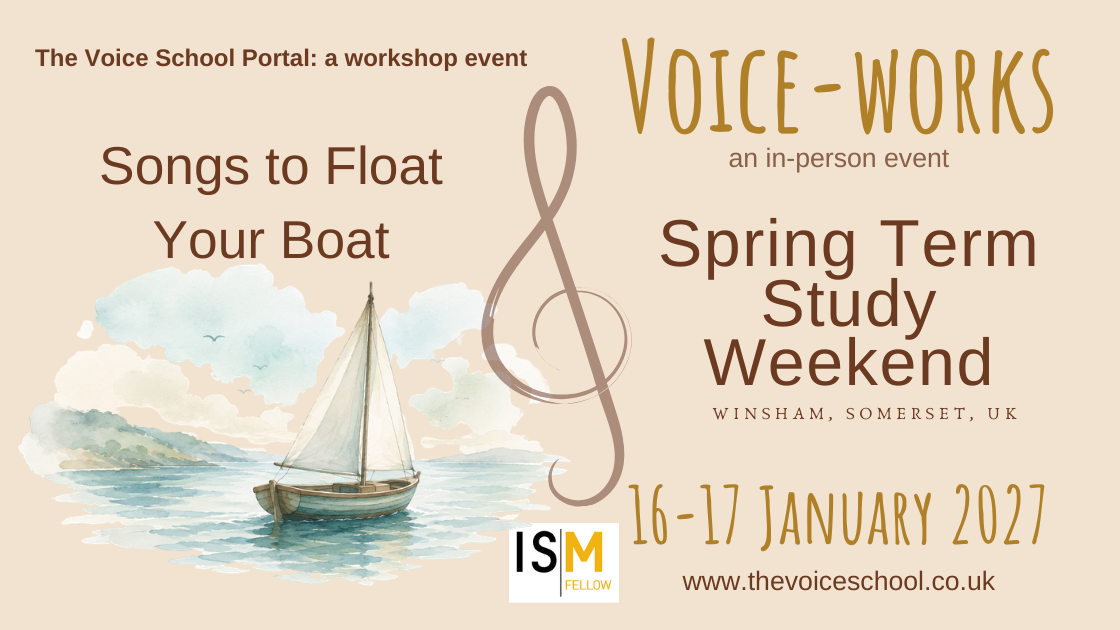
Your Desert Island Songs
16–17 January 2027 · Winsham, Somerset.
Revisit the songs in your repertoire and explore what continues to inspire, challenge and reward you, in the company of other curious classical singers.
Applications to sing are now open. Observer places are also available.
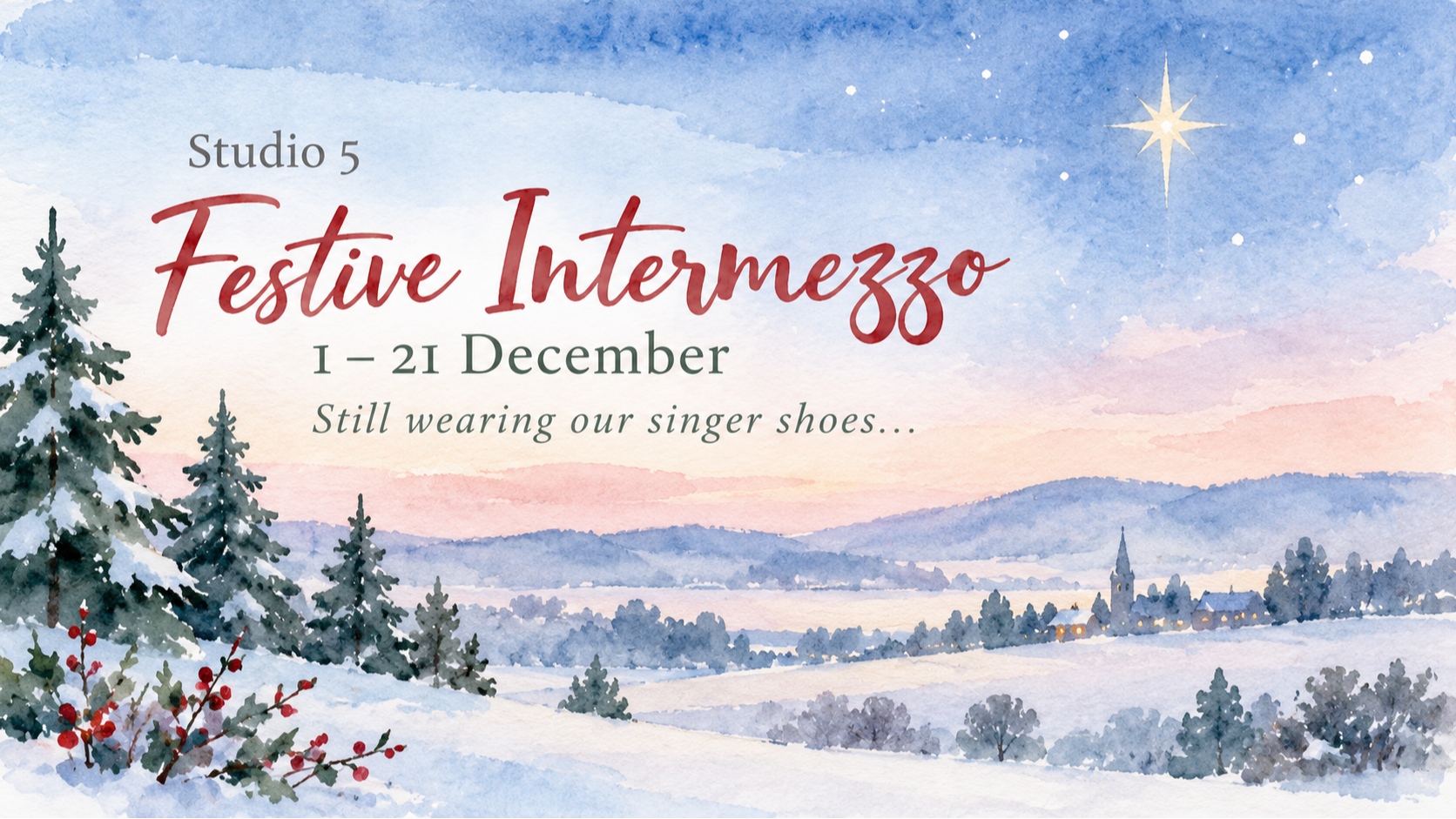
New! August Intermezzo
A short interval or pause between larger events.
Following the success of the August Intermezzo, the next Studio 5 Intermezzo will have a festive flavour. Running through the first three weeks of December, it will offer a flexible way to stay connected to your singing as the autumn term draws to a close and Christmas approaches.
The Festive Intermezzo is now being prepared, with full details coming soon.
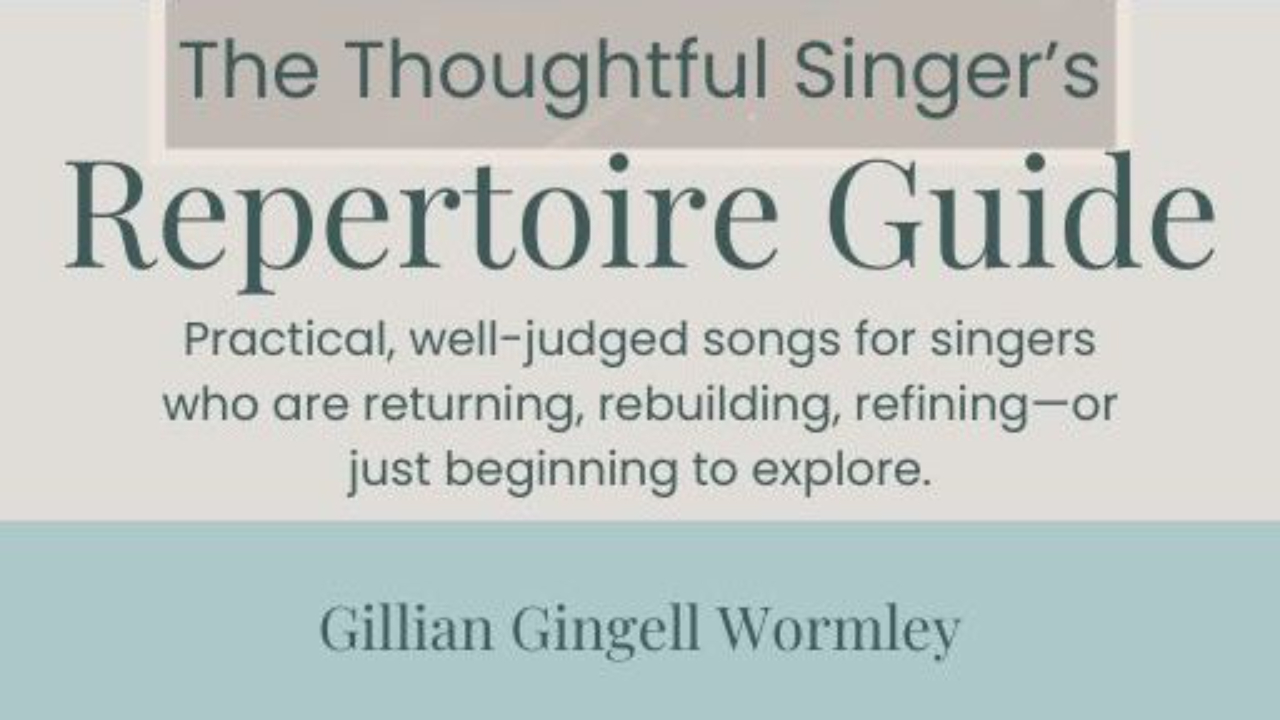
Repertoire that meets you where you are.
A curated, confidence-building guide for returning, rebuilding, or refining classical singers. Includes expert commentary, a clickable playlist, and clarity on how to choose songs that truly fit. Instant download.
The Classical Singer's Path
A new Substack series, written from the inside out - glimpses into my own life as a classical singer, and the way I think about the art we share. It is quieter than the bustle of The Voice School, a place for reflection, stories, and ideas that might travel with you into your own singing life.. It’s free to subscribe, and early support means a lot as I get it going. You’re warmly invited to join me there.

Featured in Feedspot
Ranked #29 in their Top 60 Singing Blogs — a lovely recognition of our reflective approach to singing.
Stay connected with new events and all updates!

Singing Basics Guide
Getting to grips with or making improvements to your singing and the methods to achieve progress are all far easier and more accessible than you think.
