
What should classical singers do between lessons?
What should classical singers do between lessons?
Learning how to sing involves much more than the time we spend with a singing teacher. For adult classical singers, an important part of the learning process is discovering how to continue developing independently: how we practise, how we approach repertoire, what we listen for and how we make sense of our own discoveries between singing lessons.
This is something I talk about a great deal with singers. There can be an assumption that the serious work, the real progress, happens when the teacher is there. Yet so much of our development as musicians depends upon what we learn to do for ourselves, with good guidance to help us recognise what matters and where our curiosity might take us.
What should I actually be doing between lessons?
It sounds such a straightforward question.
For many years the answer might simply have been, “Practise.”
Of course we need to practise. Singing is a practical discipline, and there is no substitute for spending time with the voice. But I have often wondered whether that answer is enough.
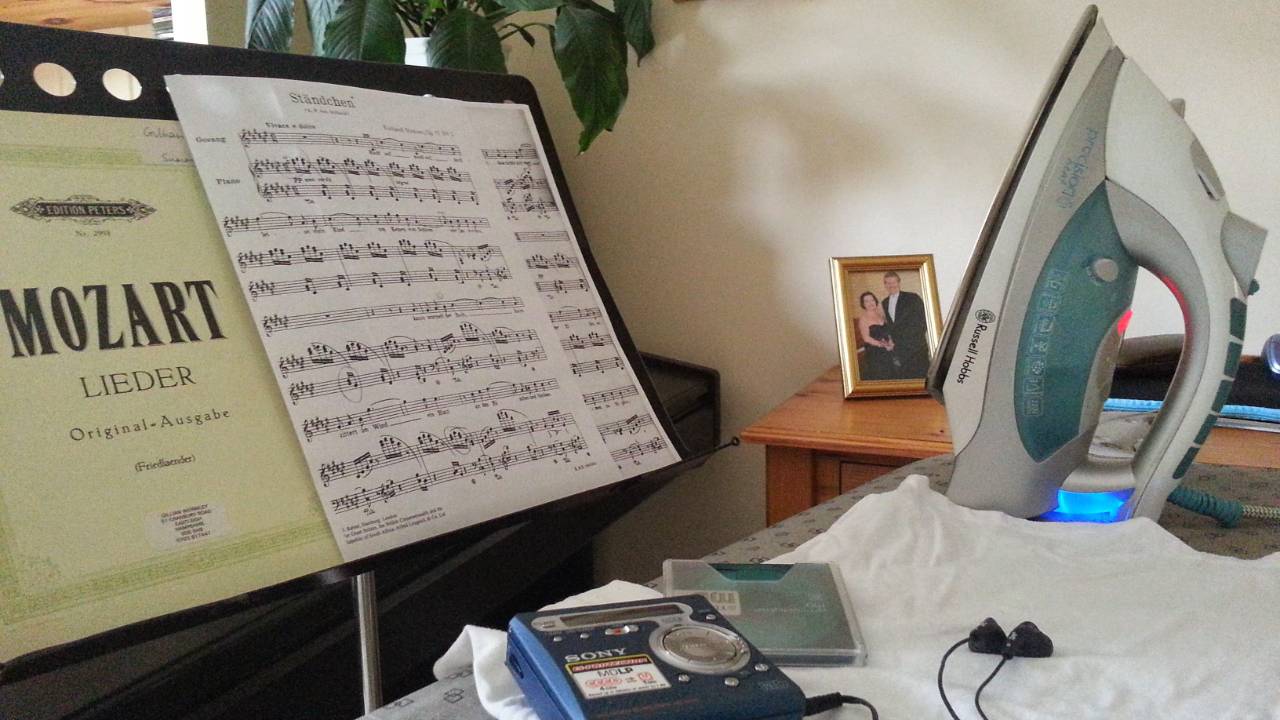
Some of the most significant discoveries in my own musical life have not happened while I was actually singing. They have happened while I was reading a poem, becoming curious about a composer, comparing different recordings, going back to the music copy I thought I knew, or simply allowing myself time to think broadly about a song before I sang another note.
Curiosity has always been one of my greatest teachers.
And perhaps that points towards an important distinction. There is a difference between practising and learning.
Practising matters. We need repetition. We need to give the voice opportunities to understand what we are asking of it, and we need to return to things often enough for technical and musical ideas to become familiar.
Learning, though, can spread much further.
You may begin with a song you have been given to study and find yourself wondering about the poem. Who wrote it? What was happening in that person's life? Did the composer set any other poems by the same writer? Then perhaps you listen to several recordings and notice that one singer allows far more time at a particular point than another. Why? What is happening in the harmony? What does the text suggest? Which interpretation convinces you, and why?
None of this requires you to sing a note.
Yet when you next do sing the song, you may find that something has changed.
You know more.
You have opinions.
You have questions.
You have begun to form a relationship with the music that belongs to you.
Following your curiosity
I think this matters particularly for adult singers.
We bring a great deal of life with us when we come to music. We have read things, loved things, lost things, travelled, listened, remembered. We have developed tastes and instincts. We may also have accumulated quite firm ideas about how learning is supposed to happen.
For some musicians, the model they grew up with was very straightforward. You went to a teacher. The teacher told you what needed attention. You went home and practised it. Then you returned for the next lesson.
There is nothing inherently wrong with that. I learnt an enormous amount from wonderful teachers throughout my own singing life.
But I don't think that is the whole story.
A good teacher can hear things we cannot hear for ourselves. They can bring experience, knowledge and perspective to a problem. They can save us from spending weeks disappearing down the wrong path. But surely the purpose of good teaching is also to make us increasingly thoughtful and resourceful when the teacher isn't there?
I want singers to bring things back to me.
I listened to this...
I discovered this...
I tried this and something unexpected happened...
I don't understand why this phrase feels so difficult...
I found another setting of this poem...
Now we have something interesting to talk about.
The singer hasn't been waiting for the next lesson. They have been learning.
Follow your curiosity, but be guided
That balance is important.
There has never been more information available to us. We can hear extraordinary singers at the touch of a button. Scores, translations, performances, interviews, masterclasses and articles are all within reach. It is perfectly possible to spend an entire evening exploring one song and end up somewhere you never expected.
That freedom is wonderful.
It can also be bewildering.
Not everything we find online is useful. Not every piece of vocal advice is appropriate to every singer. We can become fascinated by something which takes us away from the work our own voice actually needs.
This is where guidance becomes valuable.
You allow yourself to follow your curiosity, but be guided.
I don't see those two things as opposites. In fact, I think they belong together.
The guidance gives you a framework. Your curiosity brings it to life.
And increasingly, that guidance doesn't have to happen only in a room with a teacher once a week. We can learn remotely. We can read, listen and explore in our own time. We can meet online to discuss what has emerged. We can work independently for a while and then come together in person to sing, listen, experiment and discover what all that individual work has produced.
For an adult classical singer, that opens up some rather exciting possibilities.
The time between lessons is part of the lesson
Perhaps, then, we need to stop thinking of the days or weeks between lessons as empty space.
They are part of the process.
This was brought home to me again recently when I asked singers to write about their experience after one of my Voice-works Study Weekends. Their reflections weren't simply about what they had sung. They wrote about listening, observing, conversations, notes they had made, things they wanted to research and ideas they knew would continue to inform their singing long after everyone had gone home.
That became the starting point for my recent The Classical Singer's Path essay, Deepening our relationship with song.
It also reminded me that learning doesn't necessarily announce itself while it is happening.
Sometimes we need to go away and think.
Sometimes another singer's question unlocks something for us.
Sometimes we return to a piece of music several days later and suddenly understand what we couldn't quite grasp before.
And sometimes the most useful thing we can do is write down what we have discovered before everyday life carries us on to something else.
What are you curious about?
So if you find yourself between lessons, between workshops, or perhaps simply wondering what direction your singing might take next, I wouldn't begin by asking how much practice you ought to be doing.
I would begin somewhere else.
What are you curious about?
Perhaps there is a song you've always wanted to explore. A composer you barely know. A technical question that keeps returning. A language you've avoided. A recording that makes you wonder how the singer achieved something. Perhaps you have been singing in a choir for years and are beginning to wonder what your own solo voice might be capable of.
Follow it.
Listen. Read. Sing. Make notes. Compare. Experiment. Ask questions.
And find good guidance when you need it.
This way of learning runs through everything I offer at The Voice School. There are informal ways to explore, including the August Intermezzo, my YouTube channel archive and these Take Note posts; there is the continuing shared online work within the Virtually Vocalise Studio; individual teaching; and the opportunity to bring all that curiosity into the room with other singers at a Voice-works Study Weekend.
You don't have to begin with a grand plan.
Sometimes a good question is quite enough.
And perhaps What should I do between lessons? is really the beginning of a much more interesting question:
Where might my singing take me next?
Curious about singing basics? Let's get you started with the right learning tools.
Download my free need-to-know vocal essentials guide for singers, vocal technique principles simply explained.

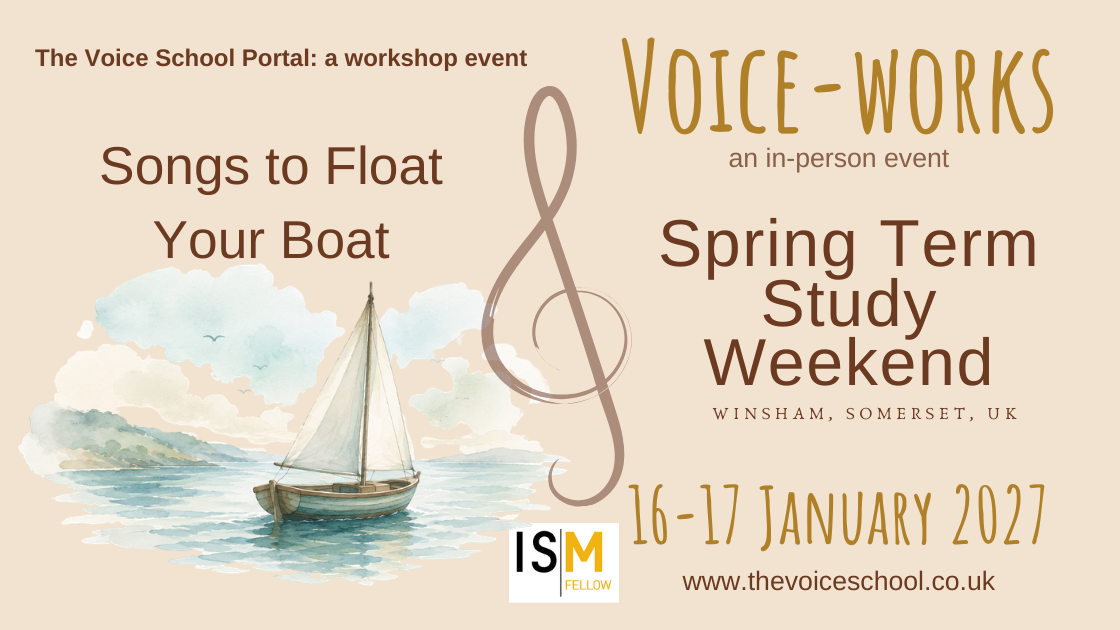
Your Desert Island Songs
16–17 January 2027 · Winsham, Somerset.
Revisit the songs in your repertoire and explore what continues to inspire, challenge and reward you, in the company of other curious classical singers.
Applications to sing are now open. Observer places are also available.
New! August Intermezzo
A short interval or pause between larger events.
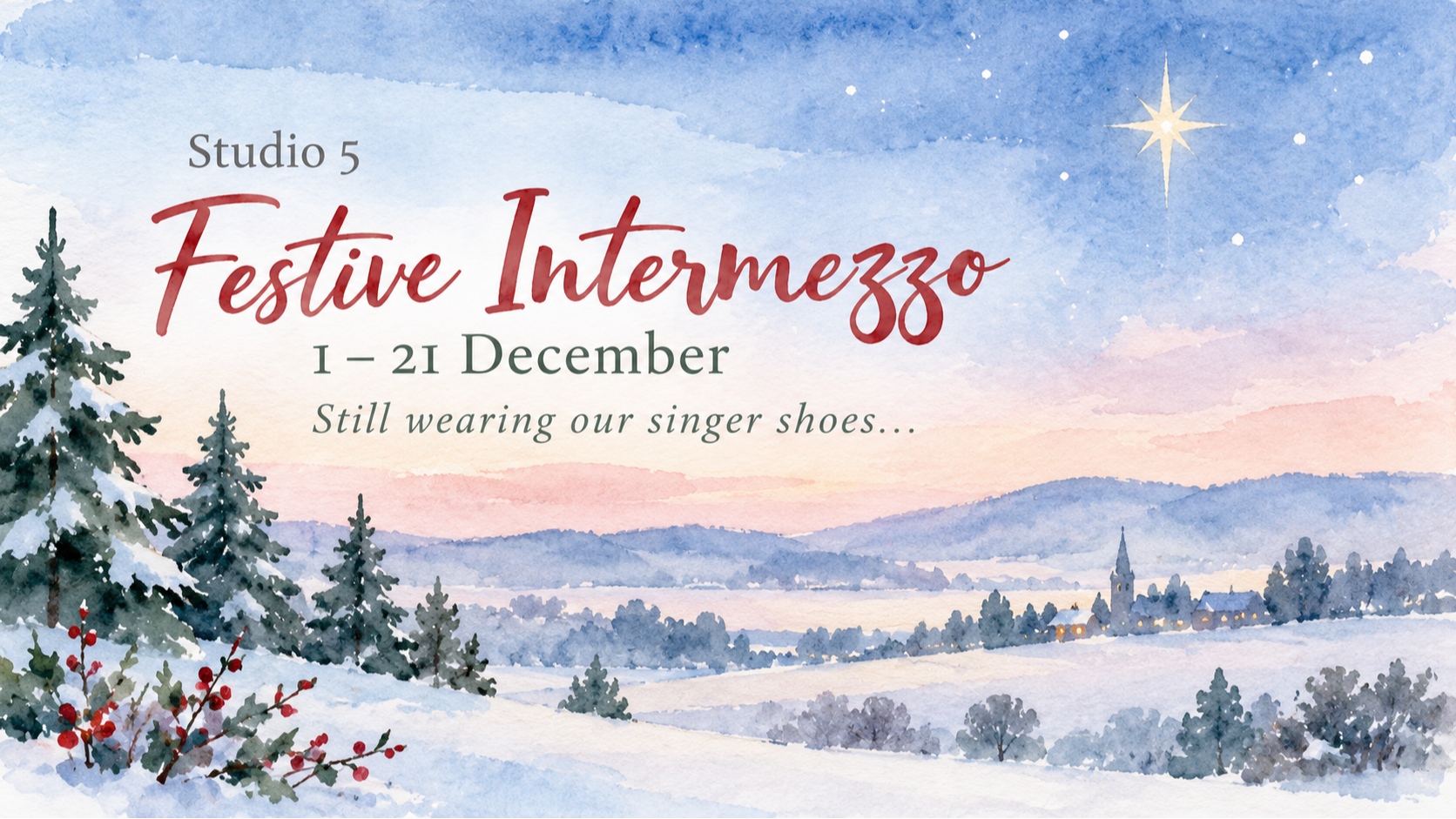
Following the success of the August Intermezzo, the next Studio 5 Intermezzo will have a festive flavour. Running through the first three weeks of December, it will offer a flexible way to stay connected to your singing as the autumn term draws to a close and Christmas approaches.
The Festive Intermezzo is now being prepared, with full details coming soon.
Repertoire that meets you where you are.
A curated, confidence-building guide for returning, rebuilding, or refining classical singers. Includes expert commentary, a clickable playlist, and clarity on how to choose songs that truly fit. Instant download.
The Classical Singer's Path
A new Substack series, written from the inside out - glimpses into my own life as a classical singer, and the way I think about the art we share. It is quieter than the bustle of The Voice School, a place for reflection, stories, and ideas that might travel with you into your own singing life.. It’s free to subscribe, and early support means a lot as I get it going. You’re warmly invited to join me there.

Featured in Feedspot
Ranked #29 in their Top 60 Singing Blogs — a lovely recognition of our reflective approach to singing.
Stay connected with new events and all updates!

Singing Basics Guide
Getting to grips with or making improvements to your singing and the methods to achieve progress are all far easier and more accessible than you think.
