
How to keep your singing voice strong over time

Many adult singers ask some version of this question: How do I keep my singing voice strong as the years go by? Is it simply a matter of age, or is there something more within our control?
The honest answer is that strength in the voice is rarely about age alone. It is far more often about how the voice has been used, how regularly it has been exercised, and whether the fundamentals have been properly understood.
I have been singing and studying seriously for decades, and I am still preparing and presenting repertoire myself. I still think carefully about vocal load. I still look at range, tessitura, stamina, and recovery time before committing to a programme. Not because I am fragile, but because I understand that the voice responds to patterns. It responds to repetition. It responds to intelligent use.
The same is true at forty as it is at seventy.
The voice responds to use, not to wishful thinking
Like any coordinated muscular system, the voice strengthens through regular, thoughtful repetition. It does't respond well to being left untouched for weeks and then pushed into action under pressure. Nor does it thrive on enthusiastic over-singing without a beneficial technical grounding.
Singers who feel their voice may be becoming weaker are not actually experiencing an inevitable decline. They are experiencing inconsistency. The pattern has broken. Practice has become occasional. Preparation has been left late. Repertoire has outpaced technique. That is not an ageing issue. It is a usage issue.
Repetition builds coordination — for better or worse
Neuroplasticity — the brain’s ability to reinforce whatever patterns we repeat — does not switch off in adulthood. The brain and body continue to reinforce whatever patterns are repeated. If tension, breath-holding, or pressed tone are practised regularly, those patterns become easier to reproduce. If balanced coordination is practised regularly, it becomes easier instead.
I have seen singers in their twenties sing themselves into difficulty through force and poor habits. I have also seen singers later in life rebuild ease and reliability by returning patiently to the essential basics.
The direction of travel matters more than the number on a birthday card.
Enthusiasm is not the same as maintenance
Workshops, performances, and study weekends are invigorating. I see singers arrive full of goodwill and determination. Sometimes there is a quiet desire to prove something, to reclaim something, or to show that the voice is still capable.
Intensity in the moment can feel productive. But long-term strength is built in quieter ways.
It is built through:
-
returning regularly to foundational and structured exercises
-
choosing repertoire that suits your current level of coordination
-
allowing recovery time
-
planning ahead rather than cramming preparation into the final days
I think about these things in my own singing life. When I choose repertoire, I am not asking, can I get through this once? I am asking, can I prepare this well, sustain it across several days, and remain vocally comfortable afterwards? That is a very different question.
Fundamentals are not remedial — they are protective
Some singers assume that revisiting the basics means they have somehow regressed. In truth, the fundamentals are what protect the voice over time.
Breath organisation. Alignment. Ease in onset. Balanced resonance. Clear articulation without tension. These are not beginner concerns. They are lifetime concerns.
When those elements are routinely maintained, strength tends to follow.
When they are ignored, singers often find themselves working harder for fewer results.
Recently, one singer reflected that age had brought a vulnerability which, far from limiting her, had deepened her learning. The humility she could now bring to the process allowed her to solve problems that had once felt immovable. That is often the turning point.
You do not need permission — but you do need understanding
You do not need permission to keep singing. There is no cut-off point imposed from outside. But if you want your voice to remain responsive and reliable, you do need to understand how it functions and to treat it with respect.
Strength over time is not about pushing harder. It is about engaging regularly. It is about small, consistent patterns woven into ordinary life. It is about choosing repertoire wisely and giving yourself time to build.
If you are interested in a more personal reflection on this theme, I recently wrote about it in greater depth on Substack, exploring what it means to keep beginning again.
Singing does not come with an expiry date. But it does require stewardship. And that stewardship can begin at any stage.
Would you find it helpful to revisit these fundamentals in a structured way? You can download my complimentary Vocal Basics Guide for adult singers. It sets out the core principles I return to again and again in my own work and with my students, and it is designed to help you keep your voice steady and responsive over time.
If you are interested in a more personal reflection on this theme, I recently wrote about it in greater depth on Substack, exploring what it means to keep beginning again. Click the image for more ...
Curious about singing basics? Let's get you started with the right learning tools.
Download my free need-to-know vocal essentials guide for singers, vocal technique principles simply explained.

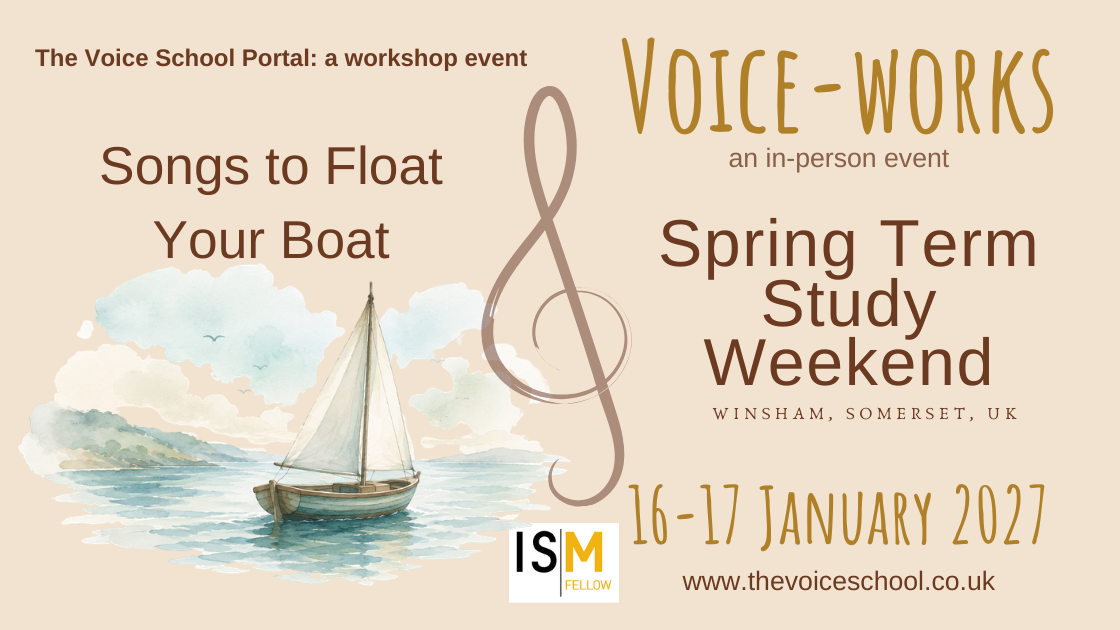
Your Desert Island Songs
16–17 January 2027 · Winsham, Somerset.
Revisit the songs in your repertoire and explore what continues to inspire, challenge and reward you, in the company of other curious classical singers.
Applications to sing are now open. Observer places are also available.
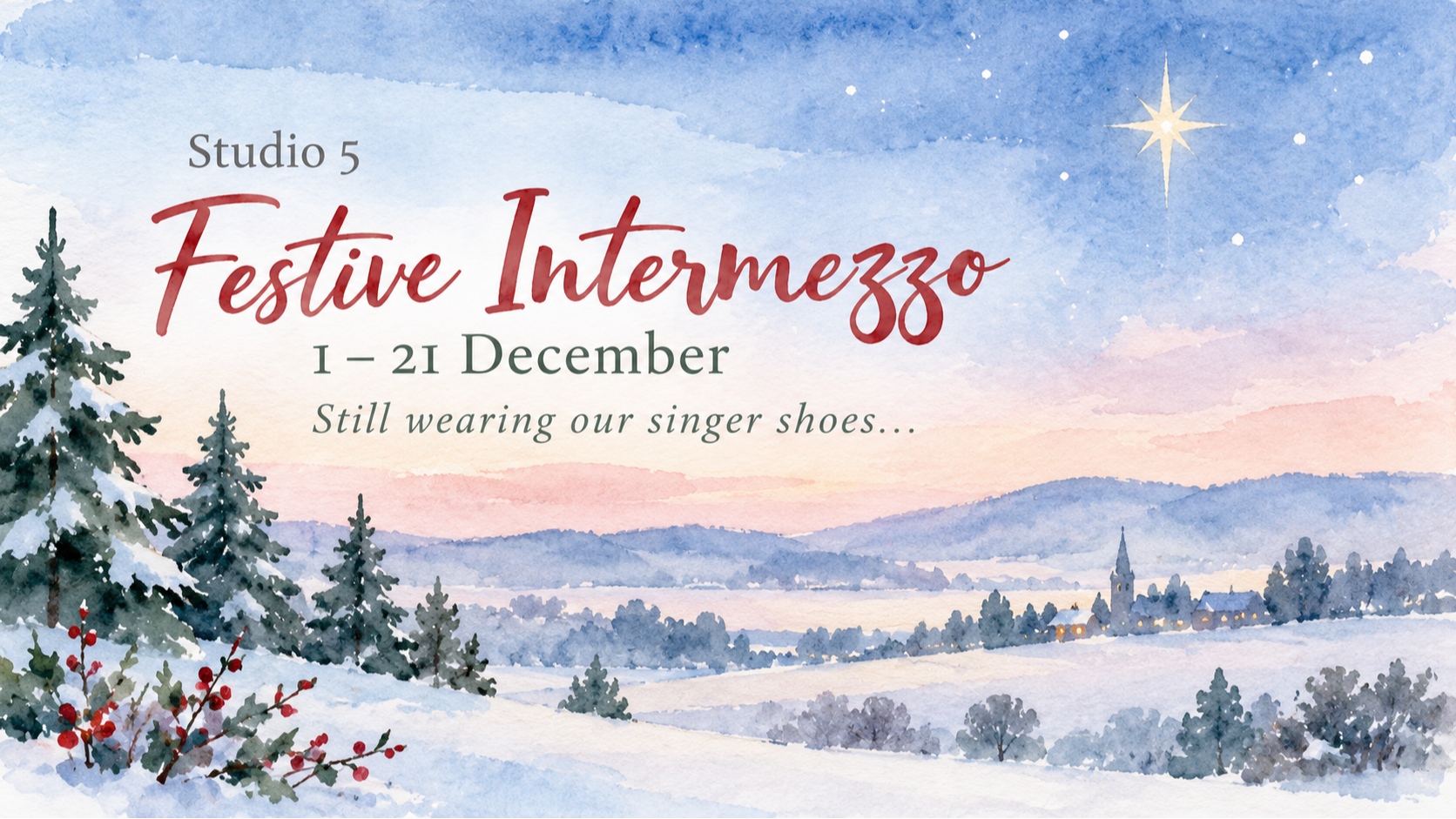
New! August Intermezzo
A short interval or pause between larger events.
Following the success of the August Intermezzo, the next Studio 5 Intermezzo will have a festive flavour. Running through the first three weeks of December, it will offer a flexible way to stay connected to your singing as the autumn term draws to a close and Christmas approaches.
The Festive Intermezzo is now being prepared, with full details coming soon.
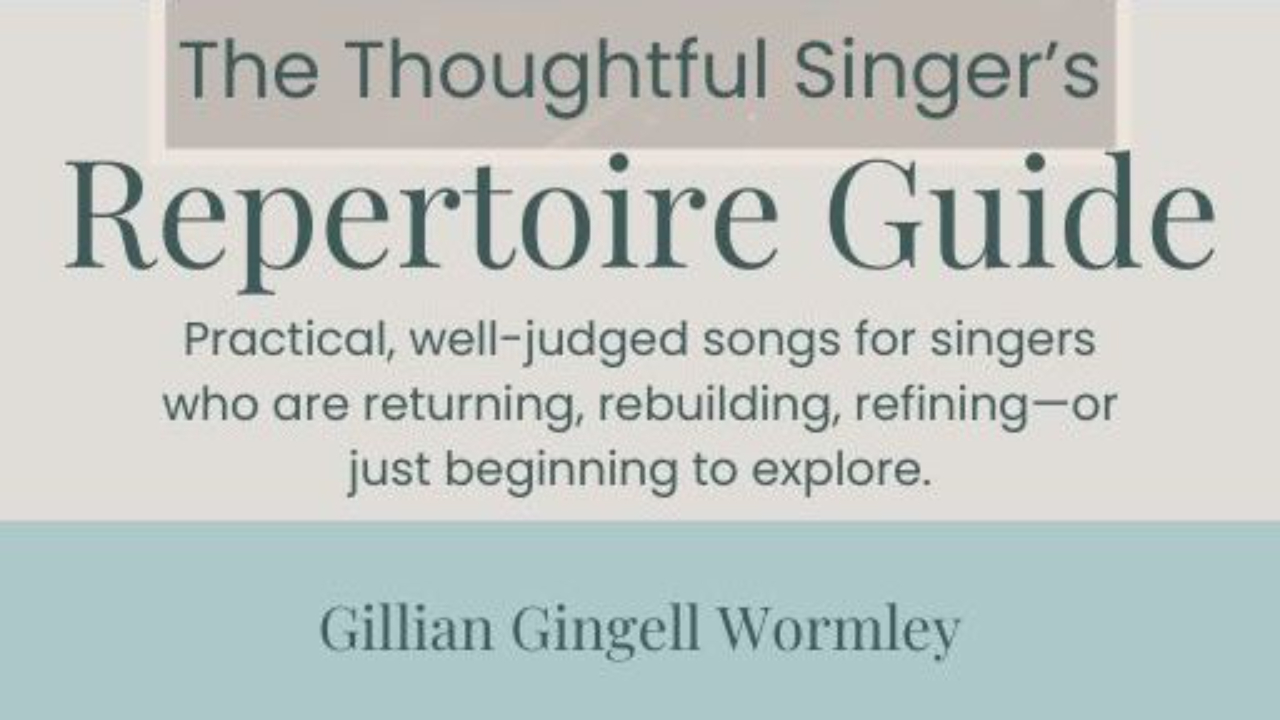
Repertoire that meets you where you are.
A curated, confidence-building guide for returning, rebuilding, or refining classical singers. Includes expert commentary, a clickable playlist, and clarity on how to choose songs that truly fit. Instant download.
The Classical Singer's Path
A new Substack series, written from the inside out - glimpses into my own life as a classical singer, and the way I think about the art we share. It is quieter than the bustle of The Voice School, a place for reflection, stories, and ideas that might travel with you into your own singing life.. It’s free to subscribe, and early support means a lot as I get it going. You’re warmly invited to join me there.

Featured in Feedspot
Ranked #29 in their Top 60 Singing Blogs — a lovely recognition of our reflective approach to singing.
Stay connected with new events and all updates!

Singing Basics Guide
Getting to grips with or making improvements to your singing and the methods to achieve progress are all far easier and more accessible than you think.
