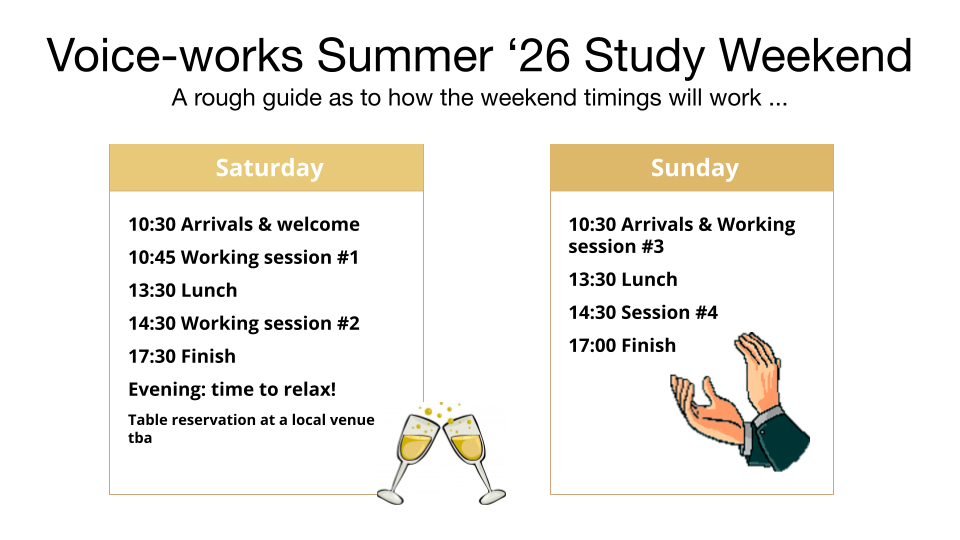
Voice-works Summer Study Weekend
Inspiration, Context & Process
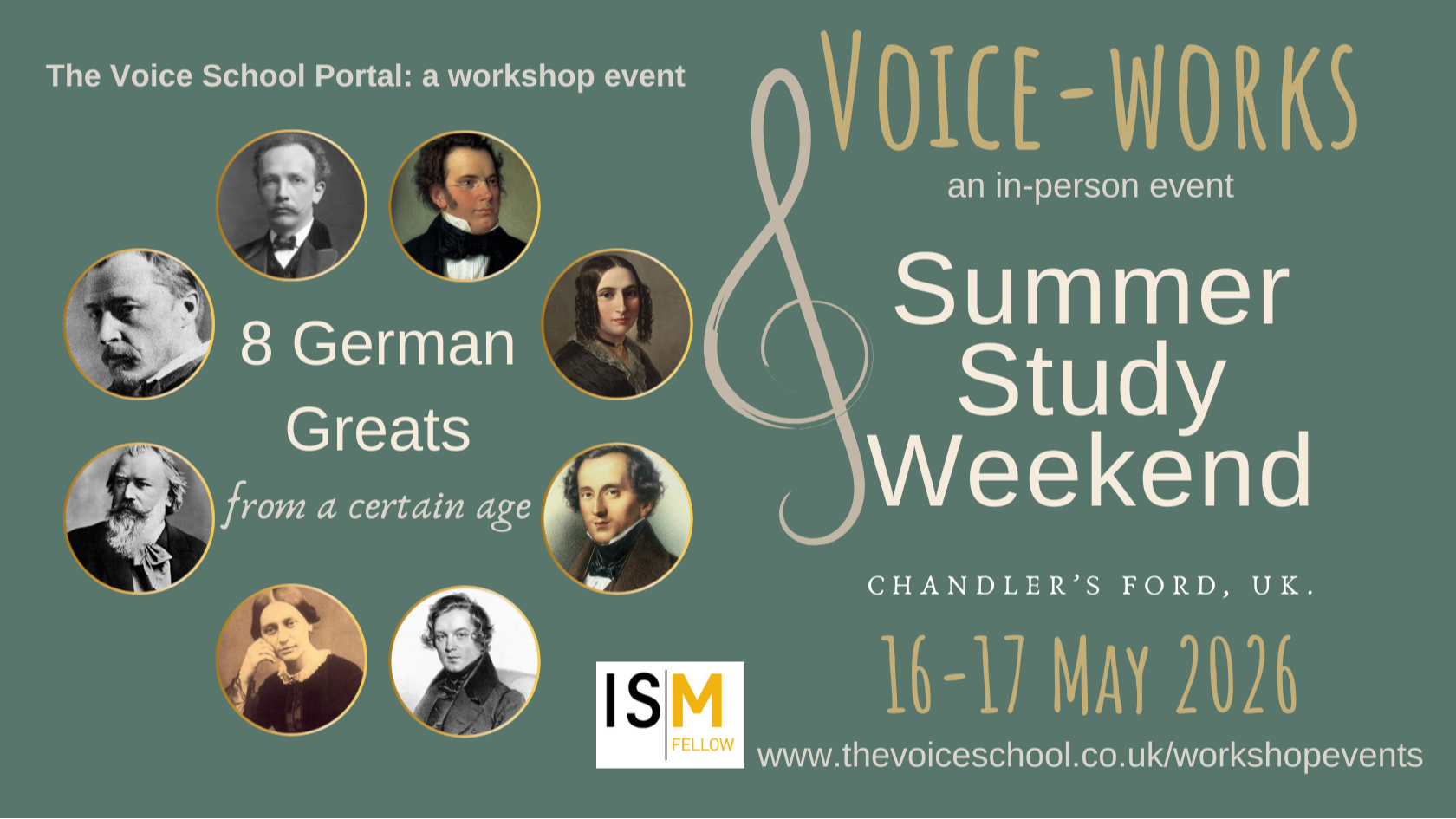
An evolving musical world
If we begin with Schubert, we find ourselves in small rooms rather than concert halls. His songs were first shared among friends, in gatherings where poetry, conversation, and music were woven together. The Lied begins here as something intimate and immediate, shaped by human company rather than public expectation.
As we move forward, that world begins to expand. In Berlin, the Mendelssohn household becomes a centre of cultural life, where music, literature, and ideas meet regularly. Felix Mendelssohn, still a young man, takes on increasing responsibility beyond the home, conducting, organising, and shaping musical life on a larger scale. Through him, music begins to move more firmly into the public sphere, without losing its connection to the domestic and the personal.
The Schumanns inhabit both of these worlds at once. Their songs are deeply rooted in poetry and inner experience, yet they are also part of a growing musical culture that reaches beyond the private salon. Around them gathers a circle of musicians and thinkers, and it is into this circle that Brahms enters, forming close personal and artistic ties that would shape his work for the rest of his life.
As the century progresses, the language of song becomes more concentrated. With Hugo Wolf, the relationship between text and music tightens, becoming more intense, more focused, sometimes more demanding. By the time we reach Richard Strauss, the sound world has opened out again, with the voice carried on broader lines and richer textures, hinting at a new musical landscape beyond the 19th century.
Across all of this, what remains constant is the sense that these composers are not working in isolation. They are reading, listening, responding to one another, and living within a shared culture where music is part of thought, conversation, and daily life. The story that unfolds from Schubert to Strauss is not just a musical progression, but a human one — a thread of lives connected through language, imagination, and the desire to give voice to experience.
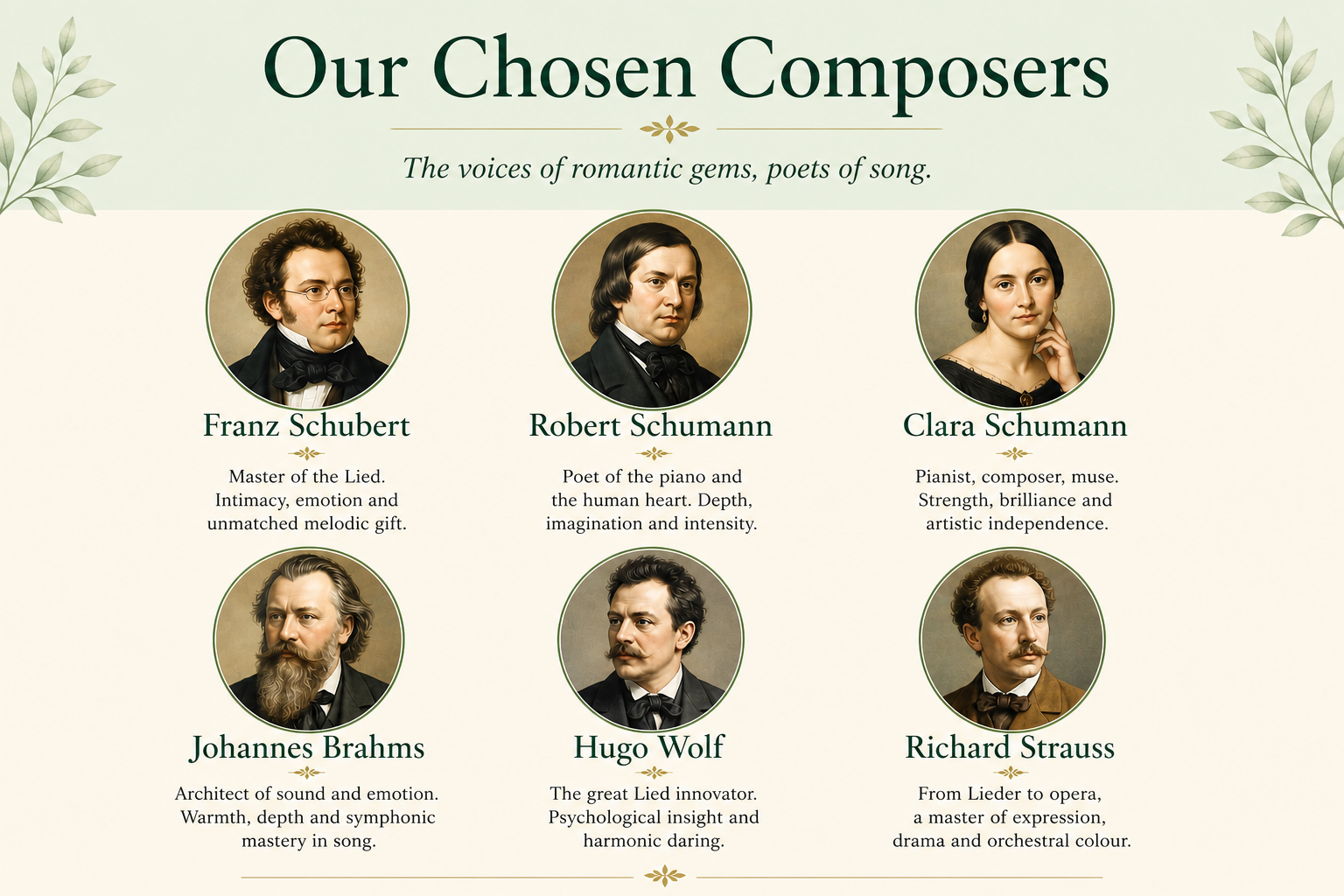
Who we've chosen ...
The composers we have chosen form a clear and expressive thread through the Lied tradition, each bringing a distinct voice while remaining connected to a shared musical world.
Franz Schubert stands at the beginning, establishing the Lied as something intimate and human, shaped by poetry and direct experience. Clara and Robert Schumann take that inwardness further, drawing the voice more deeply into the realm of thought, feeling, and imagination. Clara’s presence, both as a musician and as a central figure within this circle, is felt strongly here.
Johannes Brahms enters this world at a formative moment, forging a close and lasting connection with Clara Schumann that would shape both his life and his work. His songs reflect a deep understanding of text and line, often unfolding with a gentle intensity that rewards patience and careful listening. While his music can seem reserved at first, it holds a richness and emotional depth that becomes more apparent over time. Brahms stands as a central figure in this period, carrying the tradition forward with a strong sense of continuity and substance.
Although not directly represented in this weekend’s final line-up, the Mendelssohn household remains central to this musical world. Felix Mendelssohn, still a young man, carried an extraordinary range of responsibilities, conducting, composing, and shaping musical life at an institutional level, helping to move music into a more public and organised sphere. Alongside him, Fanny Hensel was an equally accomplished composer, working within the same rich cultural environment but largely confined to the private sphere during her lifetime. Together, they represent a household in which music, thought, and daily life were closely intertwined, forming an essential part of the society from which this repertoire emerged, and of the landscape in which the Schumanns and Brahms were working.
As the century moves on, Hugo Wolf brings a new intensity, tightening the relationship between text and music and asking for a heightened level of attention from both singer and listener. Richard Strauss then expands the sound world once more, allowing the voice to move with greater breadth and colour, while still reflecting on the tradition that came before him.
Taken together, these composers do not represent a series of separate styles, but a continuous line of musical thought. Our song choices trace that line in a way that is both varied and connected, offering a way into the repertoire that is grounded in shared experience as much as in individual works.
Your Process
As we come towards the final stretch of prep for this study weekend, I’d like to gently bring our attention back to the process work we’ve been building together over the past two years.
This work first began in Autumn 2024, when I encouraged you to start noticing how you learn — not just what you learn, but how you absorb, choose, and make sense of your repertoire. Over time, this has become one of the most revealing and valuable parts of what we do together.
Your Process Vault holds that record. It doesn’t need to be extensive or polished, just a truthful snapshot of your experience: what drew you to your songs, what you found challenging, what has changed, and what has stayed the same. It might be a short written reflection or a brief audio note, something that captures your thinking in a form that can be transcribed later.
What makes this moment particularly important is that we now have nearly two years of evidencial material. When we bring this together, it will give us a very real sense of how your learning has developed over time — something we’ll return to and explore more fully as part of the End-of-Year Voice-works Study Weekend in July.
As always, there’s no right or wrong way to do this. What matters is that you take a moment to notice what has actually been happening in your learning. That awareness is where so much of the real work begins. It's fascinating.
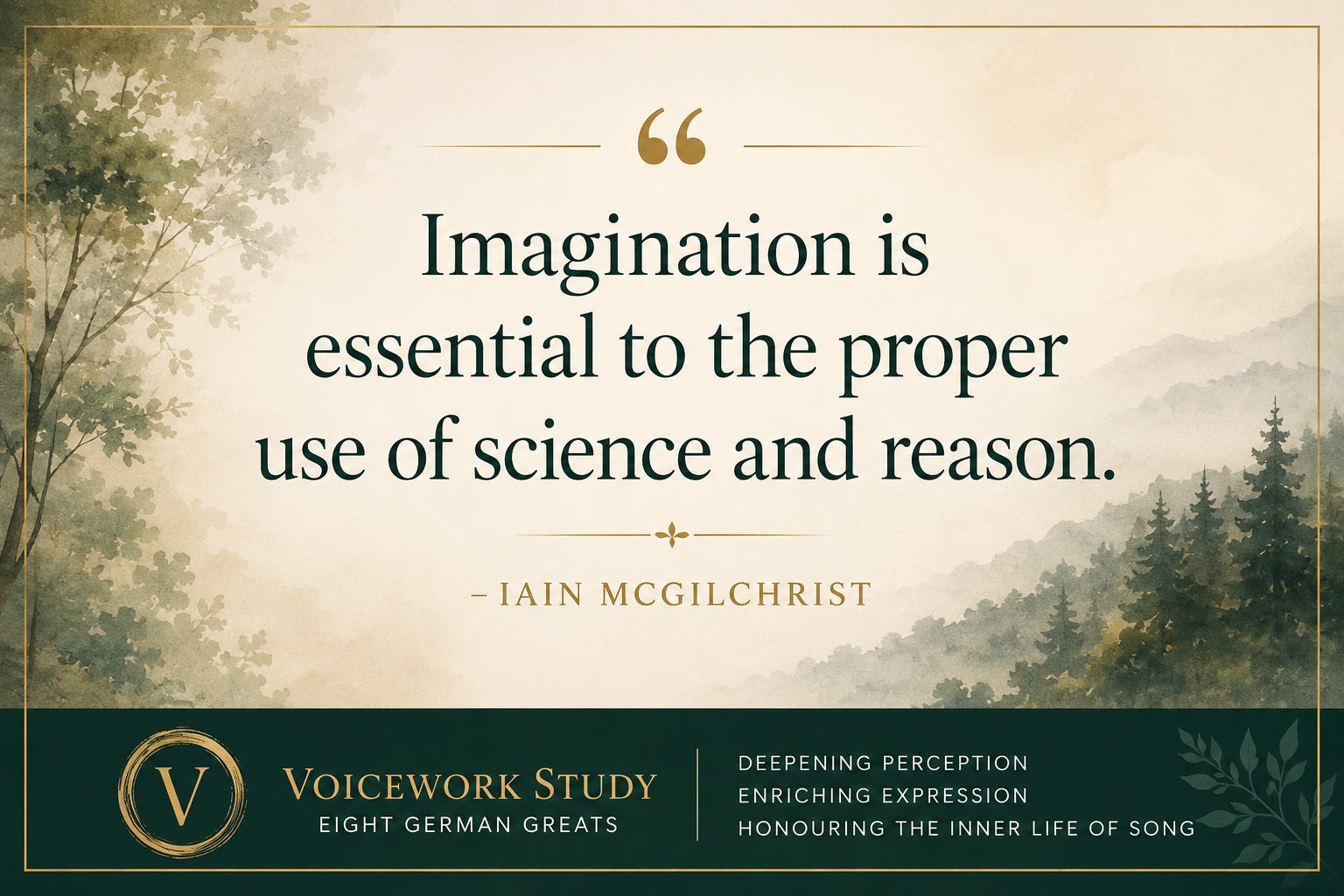
This quotation by Iain McGilchrist immediately resonated with me when thinking about our work together as singers, especially in relation to German Romantic repertoire.
Technical understanding and careful study matter deeply, of course they do. But singing also asks for imagination, atmosphere, emotional understanding and the ability to inhabit an inward world.
So many of these songs are not simply about external events, but about memory, longing, reflection and the inner life of thought and feeling.
Perhaps part of artistry is learning not only how to study music carefully, but how to allow ourselves to enter it more fully.
As I often say: you have to learn to fly.